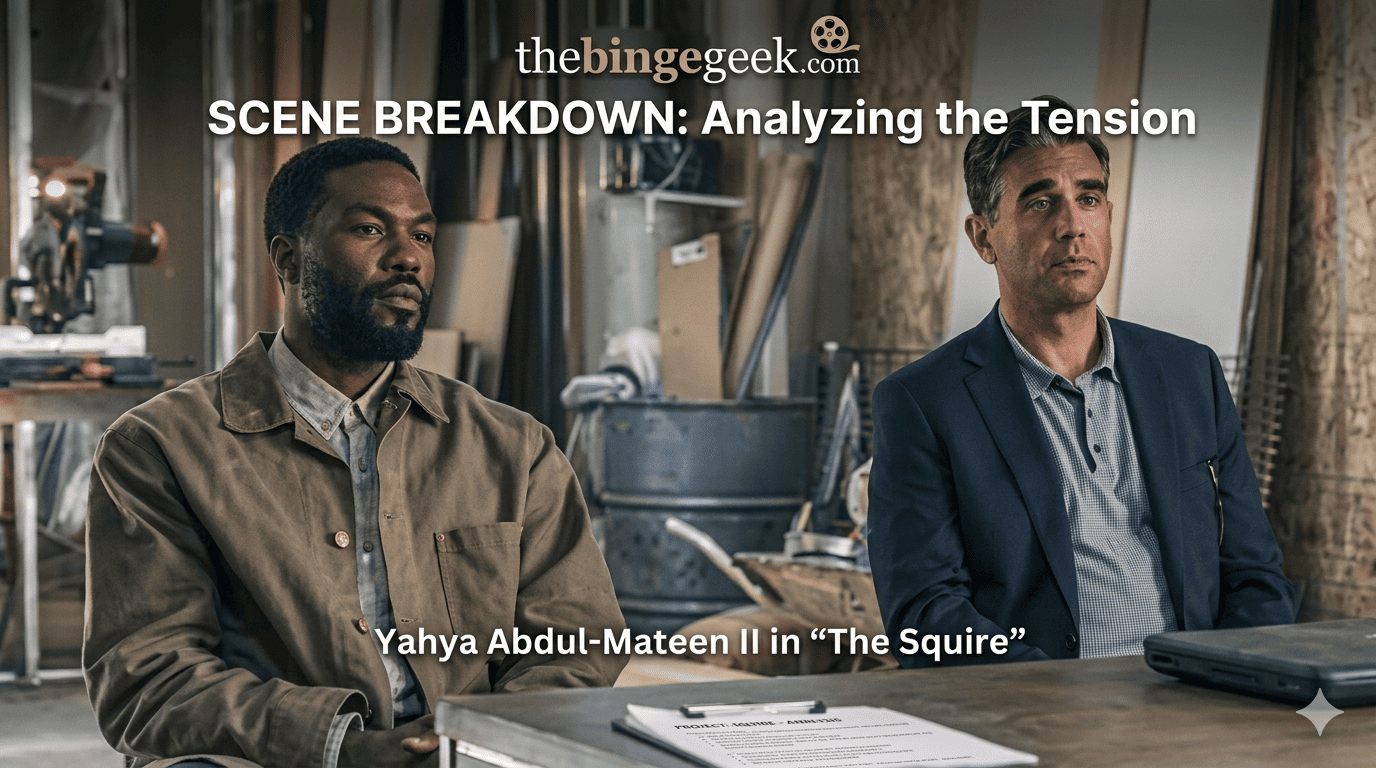
The question almost seems academic at this point. Hollywood is so dominated by remakes, reboots, sequels and spin-offs that original storytelling often feels like the exception to the rule. But some of the recent remakes have succeeded in setting themselves apart, showing that revisiting familiar material can work, when done right. It was no great surprise, then, when a television version of Man on Fire was announced.
This new adaptation is going to the small screen and Yahya Abdul-Mateen II is set to star in the title role. Created by Kyle Killen, the series has a strong supporting cast that includes Alice Braga, Billie Boullet, Scoot McNairy, Bobby Cannavale, Iago Xavier and Jefferson Baptista.
The seven-episode season is about John Creasy, a former war veteran and ex-CIA contractor, haunted by a mission gone wrong that killed his entire team. Creasy is suffering from severe PTS and trying to get away from that life. Through a connection with an old friend, Rayburn, he lands a security job in Rio de Janeiro, hoping for a fresh start.
That hope is short-lived; Creasy is tasked with protecting Rayburn’s orphaned teenage daughter, Poe, when tragedy strikes again and those close to him are murdered. Meanwhile he sets out on a path of revenge. On the way he makes an uneasy alliance with Melo, a woman with her own problems involving the dangerous politics of the local favelas.
Abdul-Mateen II takes on an iconic role from previous versions and does a decent job, but the writing doesn’t give him much to work with. Often his Creasy comes across as little more than a silent brooder who stares intensely into space, with the occasional flash of emotional depth. Sometimes he suggests vulnerability and inner conflict, but they are underdeveloped, making his character arc feel rushed.
One of the show’s biggest problems is its uneven pacing. The early episodes are a little light on substance, which is why they lean so heavily on style to maintain the tension. Quick cuts, handheld camerawork, and choreographed action sequences. These components might excite, but they can’t compensate for a thin narrative. Meanwhile, the second half of the season is packed with espionage, emotional bonding, prison breaks and betrayals. What you end up with is a structure that feels wrong.
The series does gain some strength from its exploration of favela life. It’s not necessary to the main story arc, but adds texture, and sense of place. The representation of Brazilian culture, through music, colorful settings and local dynamics, gives the show a distinctive flavor. The supporting characters, Vico, Beto and Livro, add authenticity and depth that make the overall experience surprisingly good.”
Unfortunately, Melo’s character doesn’t get the same amount of love. Here a good actress has been cast, but she is largely wasted as Creasy’s sidekick, popping in now and then to give him advice.
Another weakness is the repetitive character dynamics. Relationships often revolve around the same emotional beats with no real progress. Whether it’s Poe’s fear of abandonment or the protective bond between side characters, these interactions are revisited with little development.
Overall, Man on Fire Season 1 is a mixed bag. There are moments of tension and visual appeal, and some very good supporting performances. But it does have pacing, character depth, and narrative balance issues. It doesn’t feel like a necessary remake, but it’s entertaining enough to be a decent one-time watch, especially if you’re looking for a quick, action-packed series to binge over a weekend.