
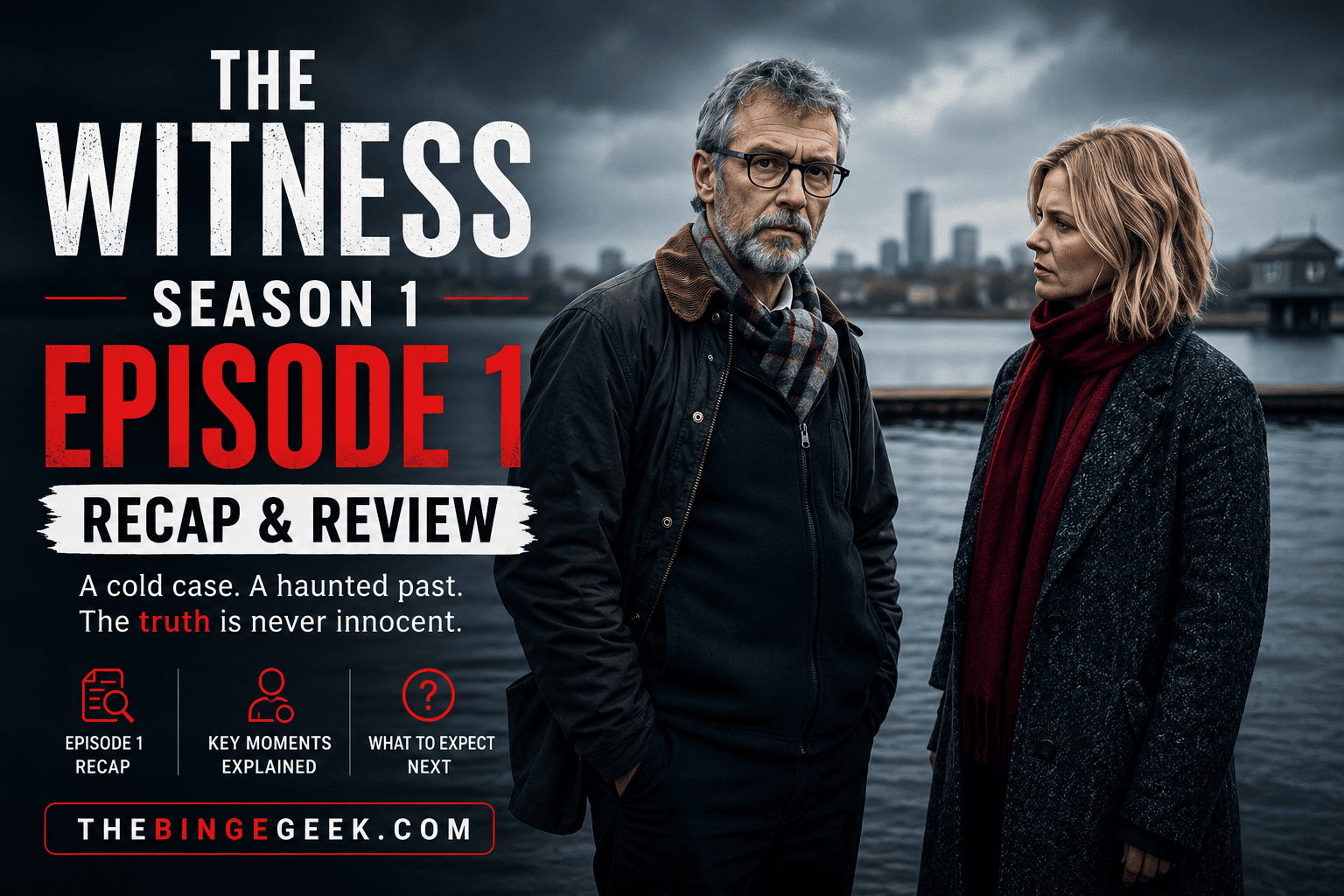
The Witness’s first episode opens by reminding us that the show is a fictionalized adaptation of the murder of Rachel Nickell, one of Britain’s most infamous criminal cases. The story immediately transports us back to July 15, 1992, when Rachel was attacked and killed while walking across Wimbledon Common with her three-year-old son, Alex.
Rachel is depicted as a caring mother, and young Alex rarely wants to be away from her. One day while out and about on what seems like an ordinary day they are approached by an unknown stranger who interrupts them. Moments later the series cuts to the aftermath and police officers discovering Alex, covered in mud and blood, wandering in shock after witnessing the horrific attack.
Soon, investigators piece together the brutal facts. Rachel was attacked, sexually assaulted, repeatedly stabbed and finally murdered while trying to save her son. Alex saw the whole thing and the detectives were left to wonder why the killer spared the child.
Rachel’s partner Andre is devastated by the tragedy. While grappling with his own loss, he also has to deal with constant media attention, Alex’s worsening behavior and pressure from experts who say the young boy should be told the truth about his mother’s fate.
Meanwhile, at Scotland Yard, public outrage swells and demands for the solution to the case grow more urgent. Detective Inspector Keith Pedder is brought in to lead the investigation and soon becomes obsessed with catching the killer.
It is clear what problems investigators face when they try to talk to Alex. The traumatized child is hardly responsive to questioning, expressing himself in drawings and play. He avoids looking at his mother’s body, and he rarely displays the sort of emotion that adults expect to see, which creates tension between Andre and the professionals trying to help him.
When the investigation stalls, child psychologist Jean is called in to perform specialized interviews with Alex. Through a series of managed sessions, bits of information start to come out. But Alex’s trauma often manifests as aggression, including a particularly disturbing scene where he lashes out with a crayon while acting out violent emotions.
Then the episode fast forwards to 2002. Alex is a teen now and she lives with Andre in Spain. With new breakthroughs in DNA technology, authorities reopen the case of Rachel and father and son are forced to face painful memories they have fought to forget for years.
Teen-age Alex is emotionally scarred by the slaying. He and Andre usually have a warm relationship, but when they talk about Rachel’s death there are times when he gets angry and frustrated. Their relationship is strained by their differences over how Rachel should be remembered, and the hold her memory still has on their lives.
In 1992, investigators face increasing pressure as criticism of the police grows. There are reports that officers may have ignored a possible suspect shortly after the murder. In return, the police try to generate new leads via media appeals and public campaigns.
One moving moment is when Andre takes Alex to Wimbledon Common to say goodbye to Rachel. It’s a rare moment of comfort amidst the ongoing grief surrounding the family.
Finally, things get moving in puppet-based interviews when Alex is able to get some key details about the attacker across. Together with information from a witness who met a suspicious man several times at the Common, police can put together a composite sketch.
Detective Pedder also enlists the help of criminal profiler Paul Britton to build up a psychological profile of the offender. Some investigators are skeptical, but the profile helps guide the course of the investigation.
The media circus surrounding the case continues to grow. Reporters invade the family’s privacy, and strangers begin approaching Rachel’s relatives. Andre becomes increasingly concerned about Alex’s safety and wellbeing due to the constant attention.
Eventually police are led to Colin Stagg by witness statements. During questioning, Stagg admits that he’d seen Rachel before the murder and found her attractive, but vehemently denies any involvement in her death. One of the witnesses picked him out of a lineup, but there’s no real evidence tying him to the crime.”
The plot of 2002 includes one of the more uncomfortable moments in the episode. Andre and Alex’s tension escalates at dinner together after a food-related argument and Rachel’s memory. Years of pent-up trauma finally explode, revealing how much the events of 1992 still affect both men.
But investigators are convinced they’ve got their man, even without a confession, and suspicion begins to swirl around Colin. Fresh details of his private correspondence only reinforce their conviction and Detective Pedder and profiler Paul Britton contemplate ever more controversial measures to obtain evidence.
The episode closes on a more unsettling note as another young mother feels she is being watched, implying the real danger may still be out there.# Summary
The Witness opens with a very emotional and gripping first episode that balances an investigation of murder with the devastating personal consequences left behind for the victim’s family.
The best thing about the premiere is Andre and Alex. The series doesn’t just treat the murder as a mystery, it explores the lingering trauma of those left behind. The father-son relationship is the emotional center of the film, and both performances help to ground the drama in real human pain.
Jordan Bolger is good at expressing Andre’s grief, frustration and helplessness. The series also excels at showcasing his flaws, making him feel like a fully realized person rather than a sympathetic stereotype.
Young actor Jahsaiah Williams, who plays Alex, is equally impressive. His facial expressions and reactions tell the confusion and trauma of a child trying to process an unimaginable event, even without long conversations.
The investigation itself moves at a steady pace, introducing viewers to the complexities of the real-life case without giving too much away too early. The episode strikes a balance between emotional storytelling and procedural, creating just enough intrigue to keep audiences invested, while respecting the human tragedy at the heart of the narrative.
Episode 1 is a gripping, heart wrenching opening chapter that leaves you wanting to see how the case will unfold.