
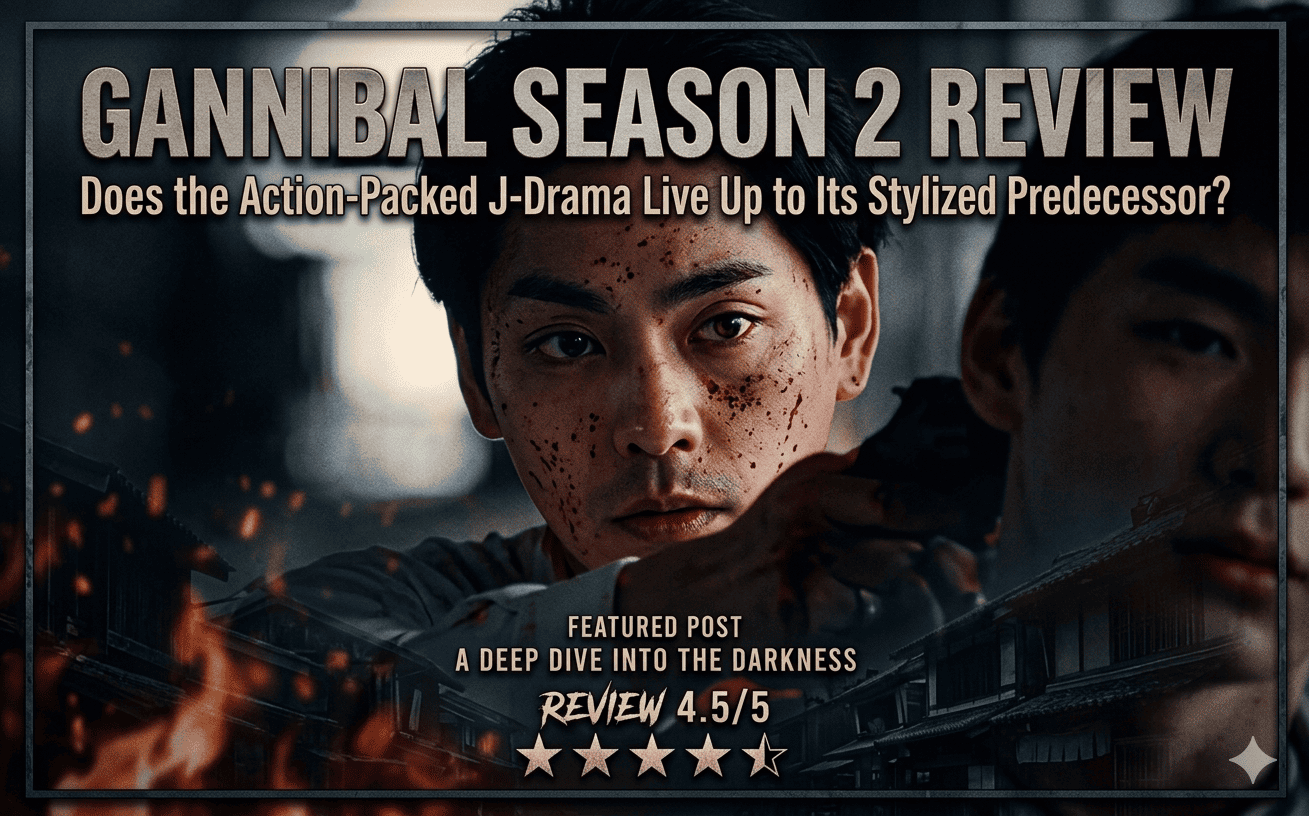
When a sequel comes out for an average series, people don’t expect much. It’s a bonus if it gets better, but not many people will be surprised if it doesn’t. But when a strong first season is followed by another, the stakes are much higher. A second season can either make the story better or ruin what made it work. Gannibal Season 2, on the other hand, doesn’t fall into that trap. The show is back after almost two years with an intense, action-packed continuation that feels more like a direct extension of the first season than a complete reinvention.
Gannibal is a Disney+ Original Japanese drama that combines psychological horror with themes of cannibalism, revenge, betrayal, and complicated investigations. The second season of the show keeps the dark tone of the manga by Ninomiya Masaaki while also adding more to the story.
Yuya Yagira, Sho Kasamatsu, Riho Yoshioka, and Yuri Tsunematsu are some of the actors who are back. Directors Shinzo Katayama and Takamasa Oe are back as well, which keeps the style and story going.
The first season was about Daigo Agawa, a police officer who moves with his family to the remote village of Kuge. At first, Daigo’s welcome seems warm, but things quickly turn creepy as he looks into the powerful Goto family and hears disturbing rumours of cannibalism and child abductions.
Season 2 starts where the last season left off and goes deeper into the Goto family’s history. At the same time, the story in the present day gets more intense when Daigo goes back to Kuge after his family is kidnapped. The Gotos want to give their daughter to a mysterious person called “That Man,” who is thought to be a god who eats people.
The mystery part is mostly solved this time, unlike in the first season. We already know who the bad guys are and why they’re doing what they’re doing, so the focus is now on fighting and staying alive. This change turns the story into a high-stakes race toward a violent and emotional ending. The story stops to look at the Gotos’ past, but the tension is still high enough to keep people interested.
Adding new characters and historical details gives the story more depth and lets you see the family’s legacy from a different angle. These backstory parts add a little drama, which makes the bad guys more relatable without completely letting them off the hook.
One of the season’s strengths lies in its focus on character-driven conflict. Rather than relying heavily on investigation, the story emphasizes direct clashes and emotional stakes. The pacing is tight, avoiding unnecessary exposition and quickly moving toward the final showdown.
The Goto family is no longer portrayed as purely evil. Their motivations and internal struggles add complexity, making them more human and, at times, even sympathetic. Characters like Keisuke, Iwao, Mayor Kiyoshi, and “That Man” are given moments that suggest the possibility of redemption. Whether that redemption is earned or meaningful becomes one of the central questions of the season.
The performances remain intense and stylized, consistent with the tone of many Japanese dramas. However, the cast shows restraint in quieter moments, allowing emotional scenes to feel grounded. Interactions such as Iwao’s softer moments with Keisuke or Gin’s long-awaited revenge add emotional weight without feeling exaggerated.
Visually, the series continues to impress. The camerawork maintains tension through dynamic movement while avoiding excessive handheld shots. Clean framing allows the action to remain clear and engaging. The show also relies on lighting and composition to create atmosphere, favoring slow-building dread over cheap jump scares.
The contrast between timelines is particularly effective. The present-day setting appears muted and bleak, while the past is brought to life with snowy landscapes, cool-toned caves, and fire-lit environments. This visual distinction enhances the myth-like quality of the Gotos’ origin story.
That said, the season is not without flaws. One noticeable issue is the shift in color grading. Season 1’s harsh, almost clinical visual tone created a uniquely unsettling atmosphere, making the village feel isolated and unnatural. Season 2 adopts a more natural look, which, while realistic, loses some of that distinctive tension. This becomes especially problematic in the penultimate episode, where dark, underexposed scenes make it difficult to follow the action.
Another weak point is the character Sumire, Keisuke’s ex-partner. Across both seasons, she remains underdeveloped and primarily functions as a narrative device. Her role often revolves around creating conflict for other characters rather than contributing meaningfully to the story herself. Despite being treated as an important figure, her lack of depth makes her the least compelling part of the series.
Even with these shortcomings, Gannibal Season 2 succeeds as a gripping and visually striking continuation. Its retro-inspired rural setting, combined with subtle use of modern elements, reinforces the sense of isolation within Kuge. The village feels disconnected from the outside world, trapped in outdated traditions that fuel the central conflict.
Ultimately, the second season delivers a satisfying blend of horror, action, and character drama. While it shifts away from the mystery-driven approach of its predecessor, it replaces it with a more direct and emotionally charged narrative. For fans of the first season, this continuation is unlikely to disappoint.