
Meta Description: Completed Directive 8020? Here are 10 memorable sci-fi horror games filled with branching decisions, survival tension, psychological dread, and cinematic storytelling.
The Fear Doesn’t Have to End When the Credits Roll
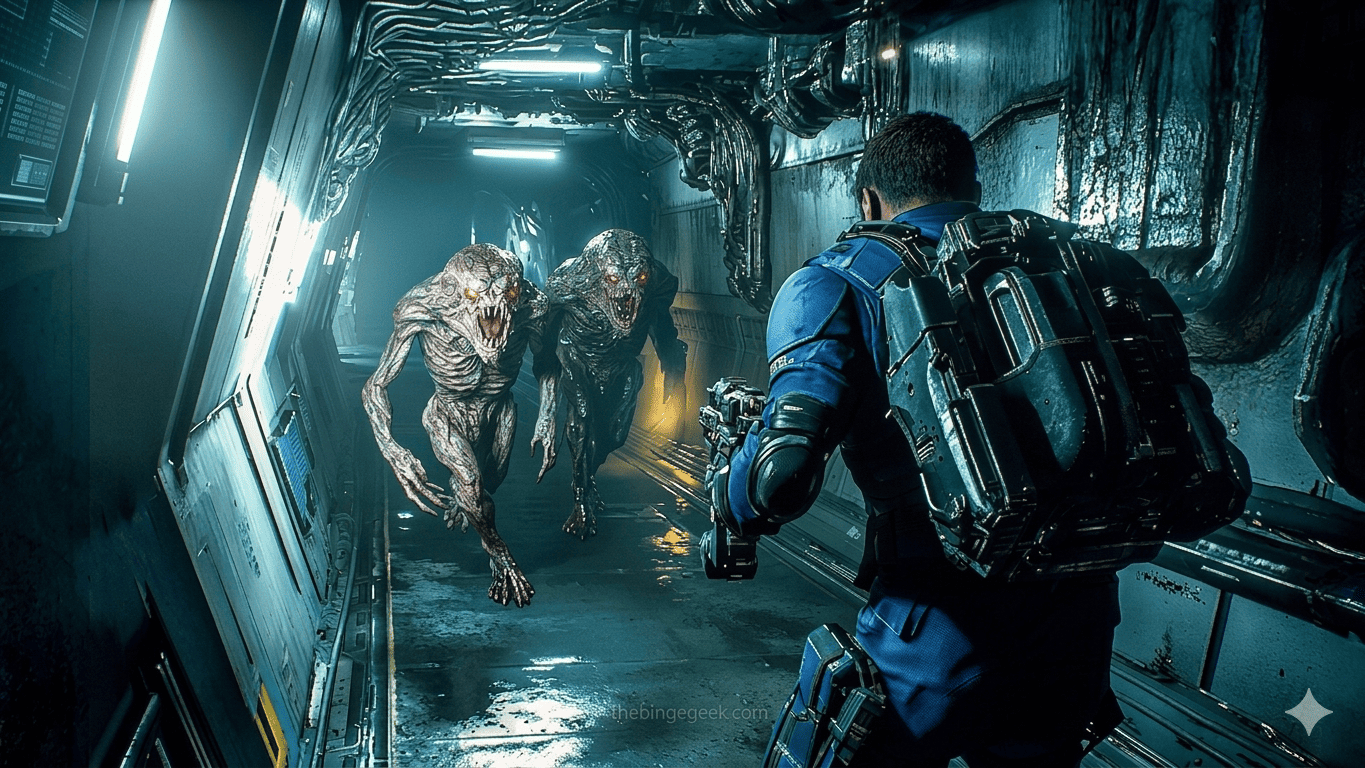
Directive 8020 is one of those rare games in which cinematic storytelling and real tension are one. The kind of experience that stays with you long after the final decision has been made, between the life and death choices, the creepy mysteries and the constant suspicion that not everyone is exactly who they seem to be.
And of course when it’s over the obvious question is what do you play after?
The good news is sci-fi horror has quietly become home to some of the most unforgettable experiences in gaming. If branching narratives, psychological terror, space-station paranoia, and survival scenarios where every choice feels irreversible are what you’re after, then these ten games should be on your radar.
- Alien: Isolation – The Most Cruel Space Horror
If Directive 8020 left you paranoid about what could be lurking around the next corner, Alien: Isolation makes that fear an art form.
Years after the events of Alien, players step into the shoes of Amanda Ripley, who is searching for answers about her mother’s disappearance aboard the doomed Sevastopol station.
But the investigation soon takes a back seat.
The real star here is the Xenomorph—an enemy that doesn’t play by the rules, doesn’t follow predictable patterns, and rarely gives you time to breathe. You are not a soldier. Your target.
It’s not the jump scares that make it memorable, it’s the silence in between.
Why Directive 8020 Fans Will Enjoy It
Unceasing suspense
sci-fi setting in a vacuum
Survival through hiding, not fighting
- The Dark Pictures Anthology: House of Ashes – High-Pressure Choices
If you’re a fan of the branching decisions in Directive 8020, this one feels like a natural progression.
House of Ashes is set during a 2003 military operation in Iraq, and starts out as a conflict between soldiers… before it turns into something far more terrifying beneath the desert.
Ruinas antiguas. Predators unknown. Trust limited.
This is classic Supermassive storytelling, but one of their strongest arguably.
Characters clash, alliances shift and every dialogue option feels heavy with consequence. One wrong move and silently you can be sealing someone’s fate without even knowing it.
Standout Features
The uneasy partnerships create emotional tension above the monster threat.
- Until Dawn – The Game That Perfected Interactive Horror
Prior to Directive 8020, there was Until Dawn.
A year after a tragedy, a group of friends return to an isolated mountain lodge searching for closure… only to find themselves in the middle of a nightmare.
It’s a familiar set-up, but an extraordinary execution”.
The game thrives on slasher-movie energy, while constantly subverting expectations. Every conversation counts. Every quick reaction matters. Every mistake can resonate for hours.
And just when you think you know what’s happening…
Well, probably not, right?
Why It Keeps Working
With a cast that’s so realistic that keeping everyone alive really becomes stressful.
- Dead Space – Isolation, Blood and Survival
Some games make you afraid.
Dead Space is tiring.
Engineer Isaac Clarke discovers horrors in the dark when a simple repair job aboard a mining ship becomes a desperate fight for survival.
Ammo is tight. Corridors feel like a squeeze. All noise is suspect.
What makes Dead Space special is that combat generates its own tension. You have to think, adapt, and keep your cool under pressure. It’s not just shooting enemies.
And, honestly? It doesn’t keep calm for long.
Best for:
Players who want more action but don’t want to lose the fear factor.
- Prey – Intelligence Is Your Most Powerful Weapon
Directive 8020 had you questioning who you could trust, Prey has you questioning everything in the room.
Set on board Talos I, players take the role of Morgan Yu, who is in the midst of a catastrophic experiment that has released the Typhon: shape-shifting alien organisms that can imitate everyday objects.
That coffee cup?
Might be alive.
That chair?
Not a chair perhaps.
Sounds simple but creates a paranoia level few games can match.
What’s New
Prey rewards creativity, not a single solution: hack systems, sneak past threats, craft tools, or fight head-on.
- SOMA – The Lasting Horror
Some games scare you while you’re playing.
SOMA creeps you out when you stop playing.
Inside the underwater facility PATHOS-II, Simon Jarrett wakes up in a world that makes no sense.
This isn’t your typical survival horror, it’s something heavier.
Identity. Awareness. Man.
The monsters are disturbing, yes, but the philosophical questions hit harder than any creature design could.
My Opinion
This could be the smartest sci-fi horror story in video games.
- The Thing – Can’t Trust Anyone
Cult horror title thrives on suspicion inspired by The Thing
You head a rescue team to Antarctica in search of answers.
Instead you find fear… and the disturbing possibility that your teammates are no longer human.
Its trust system was ahead of the times. Depending on how things go, squad members can panic, ignore orders or even turn against you.
Not all the mechanics have aged well, but the paranoia has aged like fine wine.
- Signalis – Retro Horror With Emotional Depth
Signalis looks like a love letter to old-school survival horror, on the surface.
But leave it for a few hours and it becomes something much stranger.
You are Elster, an android tasked with finding her partner who has vanished in a strange place of shattered memories and alarming truths.
The puzzles are clever. Its combat is punishing.
But it’s the emotional core that makes it unforgettable.
The Hidden Power
It never quite explains itself, which somehow makes everything more haunting.
- Observation – Witnessing the Horror
Usual formula is flipped by observation.
You don’t control a survivor – you play as S.A.M., an artificial intelligence on a damaged space station.
You have a simple job. Help Dr Emma Fisher find out what happened.
But the deeper you delve, the stranger it gets.
The game generates tension through distance rather than direct danger because you experience events through cameras, systems, and surveillance feeds.
And some way… that’s even more creepy.
- The Invincible – A Slow Burn Cosmic Mystery
Not every game needs monsters to create a sense of dread.
On the mysterious planet Regis III, astrobiologist Yasna looks for her missing crew in this atmospheric adventure inspired by The Invincible.
The game sacrifices action for exploration, mystery and big philosophical questions.
The retro-futuristic tech that gives the world its distinctive identity, and the story slowly makes its way towards answers that are as interesting as they are unsettling.
For Players Wanting More Than Jump Scares
This is science fiction that demands your patience.
What is the game most similar to Directive 8020?
If you want that same branching narrative energy, start with Until Dawn or House of Ashes.
Must haves if you loved the space setting are Alien: Isolation, Dead Space and Prey.
And if you enjoyed the more profound themes of identity in Directive 8020… SOMA may completely destroy you … in a good way.
The Bottom Line:
Directive 8020 may have a new name in cinematic sci-fi horror, but it’s standing on the shoulders of some amazing games that came before.
Branching choices, brutal survival, philosophical storytelling or just plain paranoia, these ten titles prove one thing –
Horror still belongs in space.