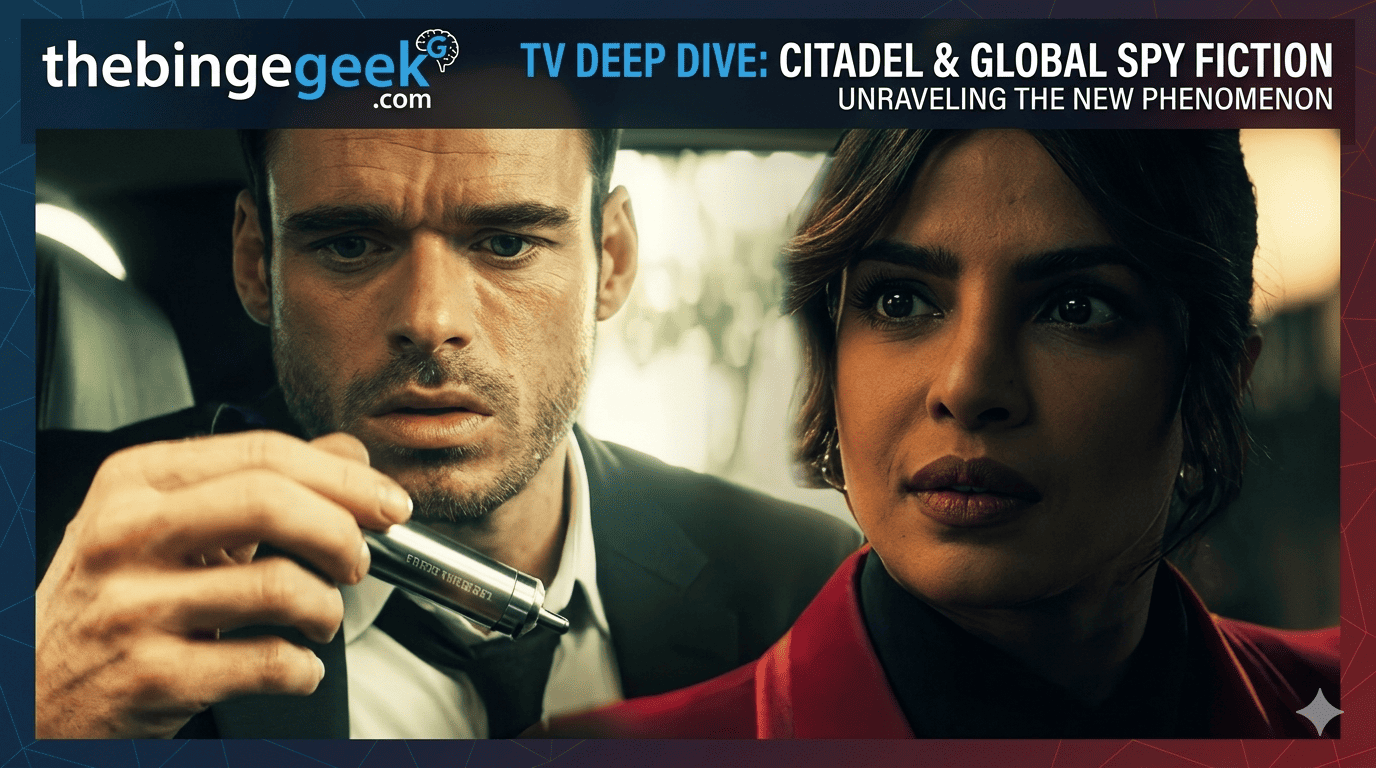
There was, naturally, a lot of expectation around the first unveiling of Citadel. This was meant to be one of television’s next big franchise hits, with Anthony Russo and Joe Russo attached as producers, a reported massive budget and multiple spin-offs already in development. Viewers expected at least a fun, well-made spy thriller. Unfortunately, Citadel fails to deliver on that promise.
The series follows elite agents Mason Kane and Nadia Sinh, former members of a secret global spy organization called Citadel. When the agency collapses both agents are wiped clean of their memories to keep secrets. Years later, a new global threat forces them to remember their forgotten past and return to the dangerous world they once left behind.
Citadel has all the ingredients for an exciting espionage drama on paper. Secret societies, world conspiracies, high-stakes missions, and morally ambiguous characters should have made for a gripping story. Instead the show is a shockingly generic and uninspired experience.
Citadel suffers from one of the biggest problems, that everything feels so familiar. The story makes use of a lot of standard spy-thriller clichés without adding anything new or meaningful. There’s a good spy agency, an evil rival organization, dangerous weapons, shadowy rich families, and world ending threats – but not much depth behind any of it. The missions are criminal syndicates, submarines and global security threats with little explanation. The world feels shallow, not immersive.
The technology of the series seems also to be rather underdeveloped. Devices that can erase memories, restore them instantly or hack entire national infrastructures are introduced with little logic or explanation. Instead of heightening the suspense, these convenient plot devices often make the story feel lazy and predictable.
The first episode promises something more ambitious but the series quickly settles into a pattern of plot holes, weak character development and dialogue that often feels forced. The characters start off interesting, then gradually become less so, and the big revelations don’t have the emotional or dramatic punch they ought to.
Citadel does look impressive, visually. The production values are certainly high, with stylish locations, slick cinematography, expensive costumes and big action sequences. But visual beauty alone cannot save a plot that has no substance. The charm, excitement and emotional investment to keep the audience hooked all the way through just isn’t developed, as it is in franchises such as James Bond or Mission: Impossible.
The cast does what they can with the material. Priyanka Chopra Jonas delivers one of the best performances of the series as a confident, charismatic and intense Nadia Sinh. Richard Madden does a good job as Mason Kane and Stanley Tucci and Lesley Manville make the most of limited material. Unfortunately good acting can’t completely save bad writing.
The show does deserve credit for ending the season with some intriguing cliffhangers that allow for potential improvement in a second season. With the setup out of the way now, the next episodes can finally go deeper with the world and characters.
Ultimately, Citadel is a lesson that no amount of budget, star power, or big name directors can make up for a lackluster story. It feels like a blockbuster, but there’s not much to set Season 1 apart from its shiny surface.