
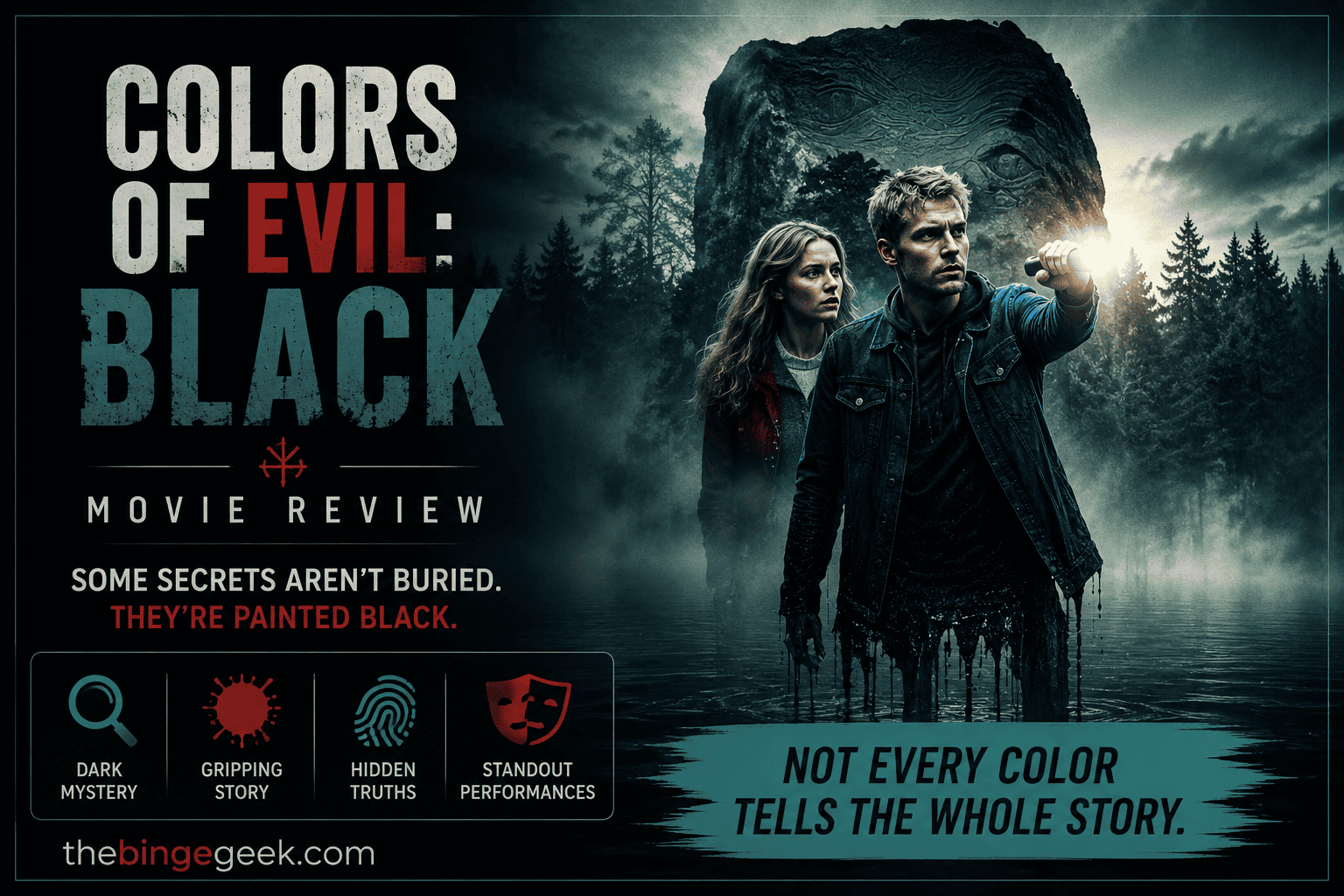
Movies about superstition often reveal a disturbing truth about human nature. These stories, apart from the myths and beliefs themselves, explore how fear, suspicion and blind faith can make ordinary people do terrible things. Colors of Evil: Black is a chilling example of this, a psychological drama-crime mystery-horror that reveals the catastrophic effects of superstition and generational trauma.
The movie is based on the bestseller by Małgorzata Oliwia Sobczak. Prosecutor Leopold Bilski investigates a mysterious disappearance, years later Julia Sarman’s son is abducted. What starts out as a search for answers becomes something much more sinister. As Leopold digs deeper into the case, he uncovers long-buried secrets lurking in a seemingly peaceful rural community, revealing a horrifying truth that has been hidden for decades.
Atmosphere is one of the film’s strong points. It is set in a remote Polish town called Trulocz and from the very beginning there is an unsettling sense of foreboding. At first sight the town appears tranquil and welcoming but its traditional way of life belies a disturbing history. Every place feels thick with secrets, the setting as much a character as anyone in the story.
Colors of Evil: Black evokes fear in a manner distinct from conventional horror conventions or superficial jump scares. The true horror is the cruelty done to the vulnerable and the disturbing thought processes that allow such acts to go unpunished. The film’s use of choir-like vocals by children adds another layer of discomfort, creating an eerie atmosphere that lingers throughout the narrative.
The film uses color and lighting in a visually effective way to support its themes. There are muted, sepia-toned images, reflecting the bleak nature of the town, with occasional red bursts signifying violence, danger and hidden evil. The interiors are warm but oppressive, wood-paneled rooms, dim yellow lighting. Some scenes have an almost ritualistic feel to them. Homes and public buildings, in contrast, often feel cold and lifeless, underscoring the emotional void beneath the community’s outward facade.
The film’s central themes of abuse, superstition and community corruption are familiar territory, but the execution is still compelling. The mystery develops slowly, slowly revealing connections between past and present. And while the overall story may not be original in its ideas, it is suspenseful enough, and has enough emotional heft to keep viewers engaged.
An important element of the story is its treatment of psychological trauma. The film is a convincing example of how abuse and fear can alter a person’s mental state and affect decisions and perceptions long after the initial events. This psychological element deepens the story and gives us a background for the superstitious attitudes that motivate much of the action in the town.
The characters themselves are deliberately understated. Instead of dramatic transformations, the film lets their personalities, mistakes and motivations come through naturally through the investigation. As secrets tumble out, the audience gets a clearer picture of each character’s role in the larger tragedy. A few key characters do get some sense of closure by the end, which feels appropriate for this kind of story.
Colors of Evil: As a dark psychological thriller, Black ultimately examines the destructive nature of fear, superstition and unresolved trauma. Though its themes may be familiar, the film manages to deliver them with sufficient tension, atmosphere and emotional heft to leave a lasting impression. It is a stark reminder of how easily communities can create victims when driven by paranoia, while also highlighting the lasting scars left by childhood abuse and collective silence.## Conclusion
Colors of Evil: Black is a well made atmospheric and creepy mystery mixed with psychological horror. Good visuals, a haunting setting and thought provoking themes help make a familiar story an engaging and memorable viewing experience.
Rating: 3.5/5