
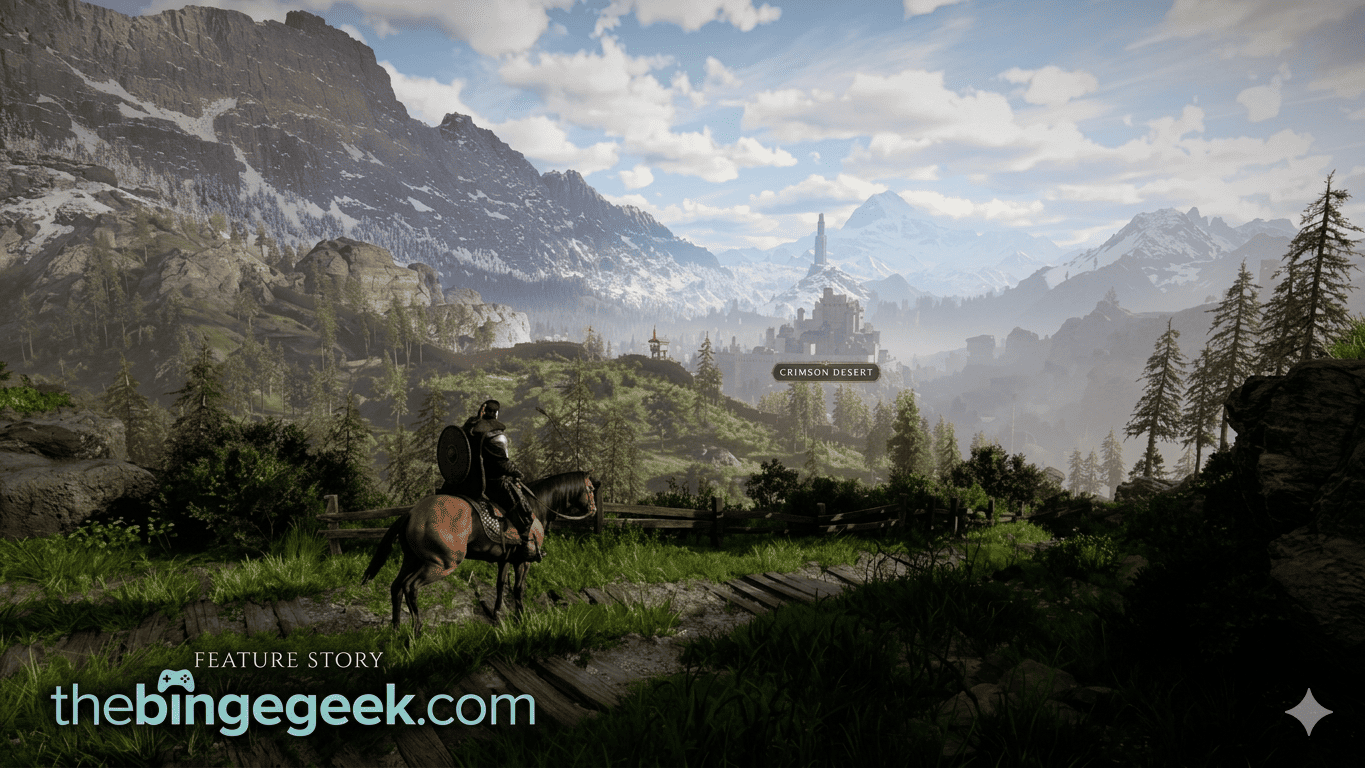
Crimson Desert is one of the most interesting and frustrating games of 2026. It doesn’t always work well together, with problems in its mechanics, structure, and clunky interface. Sometimes it seems like you have to fight the game to have fun. But there is something undeniably interesting about this. Crimson Desert is a rough game, but it gives you a real sense of what big-budget RPGs could be like if they took risks.
A Mix of Influences
Pearl Abyss made Crimson Desert, which mixes ideas from many different RPGs. You can tell that The Witcher 3: Wild Hunt and Red Dead Redemption 2 were big influences, as were Dragon’s Dogma, The Elder Scrolls V: Skyrim, and Assassin’s Creed. It even takes ideas from games that aren’t in the same genre, like Animal Crossing and Portal.
It’s a big mix, but it’s also a lot to handle. The game puts you in a world where almost anything seems possible, but it doesn’t tell you much about how its systems work.
A Beautiful Open World Made for Exploring
Crimson Desert can look amazing, but it depends on what platform you play it on. The open world, which doesn’t have any loading screens except when you fast travel, makes you feel like you’re really there.
The game makes you want to explore by making you ride to a faraway desert town with floating airships or climb mountains just to see the view. One of the best things about this design is that it is a sandbox. The more time you spend learning how it works, the more fun it will be, even if the rough spots never go away completely.
A Slow Start That Gets Better Over Time
Around the six- to seven-hour mark, there is a clear turning point where the game starts to open up in more important ways. The game keeps adding new mechanics, ideas, and surprises all the way to the end.
The campaign is okay, but it’s not very memorable. People who want a big story like The Witcher 3: Wild Hunt may be let down. The story doesn’t really connect the dots like in The Legend of Zelda: Breath of the Wild or Skyrim, where exploration is the main focus.
You are Kliff, a member of the Greymane tribe, which is like Robin Hood’s band of do-gooders. The Black Bears, led by Myurdin, attack the tribe early on. Kliff dies, but for some reason he comes back to life, which sets off a journey of revenge. The story, on the other hand, never fully explains its more interesting ideas, leaving players to just accept them.
A Story That Feels Incomplete
The story is told in 12 chapters, each of which is set in a different area. In reality, it feels more like a bunch of short stories that aren’t very connected. This structure is similar to The Witcher, but Kliff doesn’t have the charm to do it in the same way.
The other characters don’t do much better either. The early emotional beats don’t work because the pacing is too fast, and the characters don’t grow much. The story gets better around Chapter 5, but it never becomes the main attraction.
Clunky Controls and Overcomplicated Systems
One of the hardest things about the game is how it feels to play. Controls are hard to understand because they map more than one action to the same buttons, which often leads to unexpected results. Basic interactions can be annoying, and the game’s main mechanics, like lock-on systems and advanced movement, aren’t well explained.
The menus are just as hard to use. Important features are hidden behind layers of navigation, making simple tasks take a long time. Over time, it becomes more and more clear that things aren’t going smoothly when you have to manage your inventory or give companions tasks.
Combat That Truly Stands Out
Crimson Desert’s combat is its best feature, even though it has some problems. It has the precise gameplay of Souls-like games and the slower, heavier attacks of The Witcher 3: Wild Hunt. Weapons feel different, and abilities make fights more interesting.
You can mix skills like Axiom Claw, Blinding Flash, and Force Push with regular attacks to make fun combat sequences. The system rewards experimentation, whether you prefer close combat or strategic play.
When everything works, combat becomes one of the most satisfying parts of the game.
A World Full of Activities
Pywel’s world feels alive, and there are many things to do beyond the main story. Players can go bounty hunting, fishing, crafting, mining, and more. There are also hidden bosses, secret caves, and lore-filled scrolls that add depth.
However, the deeper you explore these systems, the more flaws appear. The bounty system and other mechanics can feel restrictive and unclear, especially when compared to more flexible systems like those in Skyrim.
Ambition vs Execution
Crimson Desert constantly balances between brilliance and frustration. There are moments where the game feels fresh and exciting, followed by moments where it becomes slow and confusing due to poor design or unclear mechanics.
Pearl Abyss has already improved some early issues through updates and performance fixes, which is a positive step. However, many core problems still remain.
Final Verdict
Crimson Desert is a messy yet ambitious experiment. It is far from perfect and often gets in its own way, but it also dares to try something different. For players willing to overlook its flaws, it offers a unique and rewarding experience.
It stands as one of the most original RPGs in recent years, proving that taking risks can still lead to something memorable.