
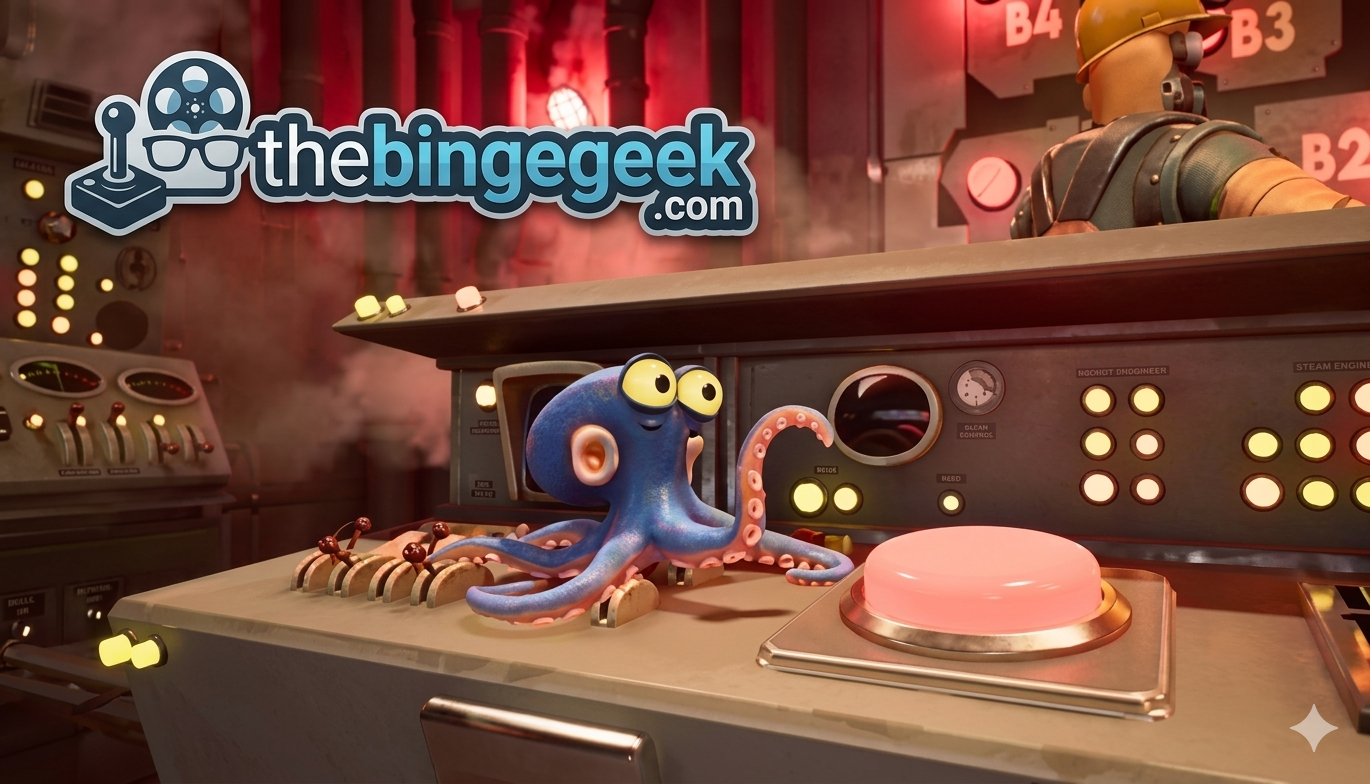
Darwin’s Paradox is a challenging platformer that has a lot of ideas for such a short game. Some of those ideas work well, but others don’t, making the game feel creative but not always consistent.
Gameplay Mechanics and Core Concept
You control Darwin, an octopus who uses all eight of his tentacles to get around a strange and dangerous world. The game is a 4–6 hour journey that combines stealth, puzzles, and precise platforming. When you control Darwin well, it feels new and real, and each tentacle acts as a tool that changes how you move and interact with the world. But that uniqueness is often lost when mechanics don’t work the same way every time or don’t get better over time.
Unique Octopus Abilities
The main idea is strong and mostly works. Being an octopus is more than just a cool look; it changes how you play the game. Darwin’s powers are what make the game fun. You can move around, solve puzzles, and interact with the environment in many different ways. Sadly, a lot of these ideas are only brought up for a short time before they can fully develop.
Level Design and Difficulty Balance
As they play, players switch between stealth sections, puzzles based on physics, and a mix of easy and hard platforming levels. The different types of things to do keep things interesting, but the difficulty level doesn’t seem to be consistent. Some parts are too easy, while others need to be done almost perfectly, which makes the spikes feel random instead of deserved. The problem isn’t the challenge itself; it’s that the mechanics don’t progress smoothly.
Storyline and Narrative Elements
The first chapter is like a tutorial, and it shows Darwin exploring the ocean with a friend before a mysterious beam pulls him to the surface and drops him in a junkyard. The mystery begins with a food factory that is about to open. The story slowly builds through environmental storytelling instead of a lot of exposition, which keeps things interesting. Darwin’s only goal is to get back to the ocean, but the trip is full of strange events, like a seagull that keeps coming back to threaten him and hints of something more sinister behind the factory.
Ending and Story Limitations
The story has some great parts and a unique tone, but it doesn’t completely end. Instead, it leaves some threads open, hinting at the possibility of a sequel but also making the whole thing feel a little unfinished.
Graphics and Visual Design
The game looks great. Water effects are especially impressive, with realistic reflections and ripples that make the underwater parts feel real. Lighting is also used well, especially in later levels where players have to find their way through dark areas with only a few light sources. The visual design always makes the game better, from junkyard tunnels full of toxic waste to more atmospheric late-game settings.
Level Design Issues and Missed Potential
Even though it looks great, the gameplay and level design don’t always work well together. New mechanics are added all the time, but they are rarely built on. There are things like cog-based platforming, toxic hazards, and environmental obstacles that show up for a short time and then go away. Because of this, levels don’t feel like they’re part of a single progression. Some mechanics have real potential, but they aren’t used again or put together in ways that matter.
Stealth Gameplay Analysis
Stealth gameplay doesn’t always work well. It works well on land if you move carefully, use camouflage, and make sure you can see where the enemy is looking. There are also creative touches, like hiding under things that can be moved to avoid being seen. But stealth underwater doesn’t work as well. Players can easily get past encounters because Darwin’s ink ability is too strong, which makes these parts less tense.
Puzzle Design and Innovation
The puzzles work, but they’re not new. Many of the mechanics will be familiar to players who have played other modern puzzle-platformers. They don’t usually make you angry, but they also don’t do much to move the genre forward.
Controls and Gameplay Frustration
Frustration becomes more obvious when there are control problems. Some skills need more than one input, which can be hard to do when you’re under a lot of stress. The controls aren’t always easy to understand, which can make it hard for the player to aim and shoot the ink jet or switch between surfaces. Sometimes it seems like you’re fighting the game instead of working with it.
Sound Design and Overall Atmosphere
Even with these problems, the game still has a certain charm. Its structure and tone are similar to older platformers, especially those that put creativity and personality first, even if they weren’t very polished. The sound design is good, and the mood stays interesting the whole time.
Final Verdict: Is Darwin’s Paradox Worth Playing?
Darwin’s Paradox doesn’t reach its full potential, but it’s still a fun and creative experience. It might not be one of the best games of the year, but if you like puzzle-platformers, it’s worth playing because it has enough originality and charm.