
Meta description (under 155 characters):
Desi Bling on Netflix dives into Dubai’s elite scene, but gets lost in repetitive romance drama, glam excess and chaotic reality TV energy.
Introduction: When Luxury Reality TV Becomes Emotional Noise
Netflix India ventures into glossy territory with Desi Bling, a seven-episode reality series that dropped on May 20 and promises a glimpse of the ultra-rich Indian expat lifestyle in Dubai. But what it delivers is a cocktail of luxury, social posturing and relationship turbulence that often eclipses everything else.
The series follows well known television personalities Karan Kundrra and Tejasswi Prakash as they try to fit into Dubai’s high-society circuit and navigate their very public relationship dynamics amidst the backdrop of designer wardrobes, yacht parties and elite gatherings.
But instead of a more balanced ensemble story, the show quickly settles into a repetitive emotional loop that dominates nearly every episode.
The Dubai starry scene meets the reality TV formula.
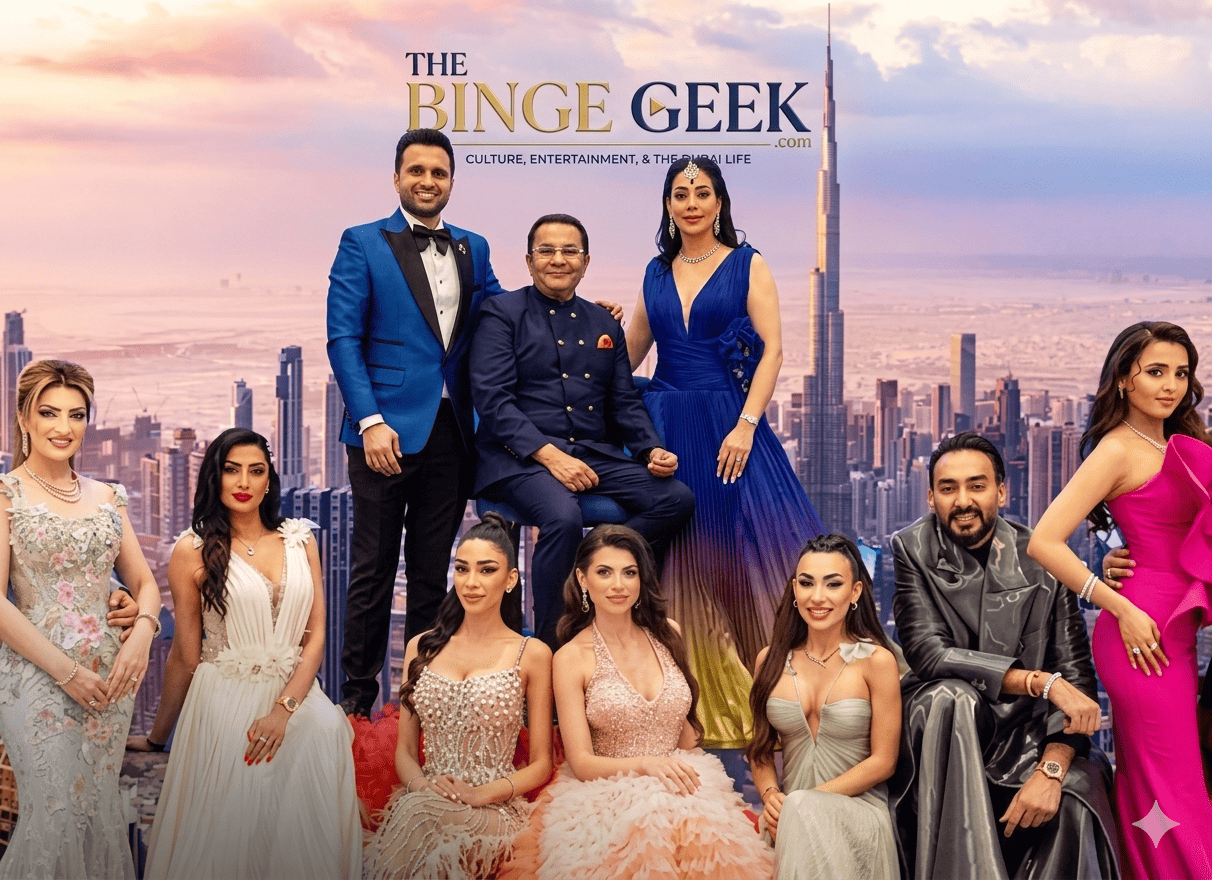
Basically Desi Bling is about showing off the extravagant life of wealthy Indian expats in Dubai. Other than the main couple, the series has some notable characters like Rizwan Sajan, Adel Sajan and Satish Satpal.
This mix should have been an engaging social snapshot – wealth, ambition, rivalry and cultural crossover on paper. In practice, much of that potential is drowned out by a narrow focus on personal relationship conflicts that feel drawn out over episodes.
Instead of developing the world of Dubai’s elite, the story keeps returning to emotional arguments and unfinished conversations, keeping the depth the setting could have brought limited.
A Love Story That Trumps Everything Else
The one major structural problem with Desi Bling is that it is too obsessed with the Karan Kundrra and Tejasswi Prakash relationship. Their relationship is the emotional core of the show, but it often seems like it’s the only story the show cares about.
Almost everything you talk about is the pressure to marry, the fear of commitment, the future planning. Conversations that feel repetitive and disconnected from the larger ensemble.
So by the time the finale rolls around, the emotional payoff is lackluster, mostly because the conflict has been watered down over several episodes with little forward motion.
Ironically the couple that was sold as the face of the show turns out to be the most divisive aspect of it.
The Real Energy is in the Ensemble Cast
Desi Bling is way more fun when it moves away from its central couple. The best moments come from the ensemble’s women, whose interactions bring a spontaneity and humor lacking from the main storyline.
The show has real character because of Pamala Serena, Lailli Mirza, Alizey Mirza, Iryna Parruck and other people like them.
The friendships, disagreements and shifting loyalties seem much more natural and interesting. Iryna’s story, however, is emotionally grounded, and she is one of the few cast members who appears to be genuinely unscripted in moments of vulnerability.
Provocation, Drama, and the Reality TV Edge
The series also uses controversial dialogue choices, especially with Tabinda Satpal, whose remarks on relationships and wealth often evoke strong reactions. These examples, whether by design or not, seem to be designed to spark conversation and social media debate, rather than to create narrative realism.
It gives the show a sharp, sometimes unsettling edge — but it also leads to questions about how much of the drama is real versus manufactured for attention.
The Glamour’s Men in the Background
The men are largely in the background, appearing at parties, luxury events, and social gatherings with little depth or development, despite the fact that the women rule the emotional and narrative space.
What this produces is a striking imbalance: the women bear the weight of the storytelling, while the men are often more of an aesthetic presence than fully fleshed-out participants in the drama.
Cameos, Chaos and Pop Culture Ignite
One of the more fun elements of the series comes from its celebrity appearances. Vivek Oberoi, Shilpa Shetty, Tiger Shroff, Tamannaah Bhatia and Sunny Leone guest-appear, injecting some unexpected energy into an uneven narrative.
For one performance that does stand out, it’s Sunny Leone, who appears to throw herself into the show’s gossip-heavy tone with an unexpectedly natural, self-aware attitude.
Karan, Tejasswi and the real deal in Reality TV Styling
Beyond the drama, one of the most discussed elements is the visual presentation. Karan Kundrra’s bold, OTT outfits are often flaunted which adds to the exaggerated feel of the show. Tejasswi Prakash’s emotional reactions have also become a staple of the show.
The on-screen presence of the characters feels precisely calibrated for the biggest reaction and not for subtle storytelling, further amplifying the show’s broader identity as stylized reality entertainment rather than grounded documentary viewing.
The Bottom Line is a Messy But Watchable Guilty Pleasure
Desi Bling is flawed but strangely compelling somehow. It is inconsistent, over-dramatized and often repetitive but it knows the mechanics of reality television, which is conflict, glamour, gossip and emotional escalation.
It doesn’t succeed as a deep dive into Dubai’s elite social scene. Instead, it thrives as chaotic, glossy background entertainment that viewers can’t quite tune out–even when they know how staged it feels.
Conclusion
Desi Bling Season 1 is less about a cultural deep dive and more a high-gloss reality experiment that plays up drama over depth. The central romance is difficult to care about, but the ensemble cast and celebrity chaos make for surprisingly watchable fare.
Flawed but addictive, this is just the kind of reality TV that knows how to stay in your head long after it has finished.