
Meta Description:?
Deep dive into the ending of Kartavya, Pawan’s moral downfall and how the film questions justice, caste violence and revenge.
Introduction Introduction
Kartavya is one of the few social dramas that can keep the unsettling mood alive long after the credits have rolled. The movie doesn’t give us a nice good vs evil fight, it throws its main character into a moral swamp where every decision leaves blood behind.
At its core, Kartavya is not just about crime, or policing. The film explores the intergenerational transmission of violence through tradition, fear and programming. At the end of the film, a disturbing question is raised: can a person fight a broken system without eventually becoming part of it?
The last part of the movie becomes very personal for SHO Pawan and takes him beyond the ambit of law and to a place where he once condemned.
A police officer torn between duty and family
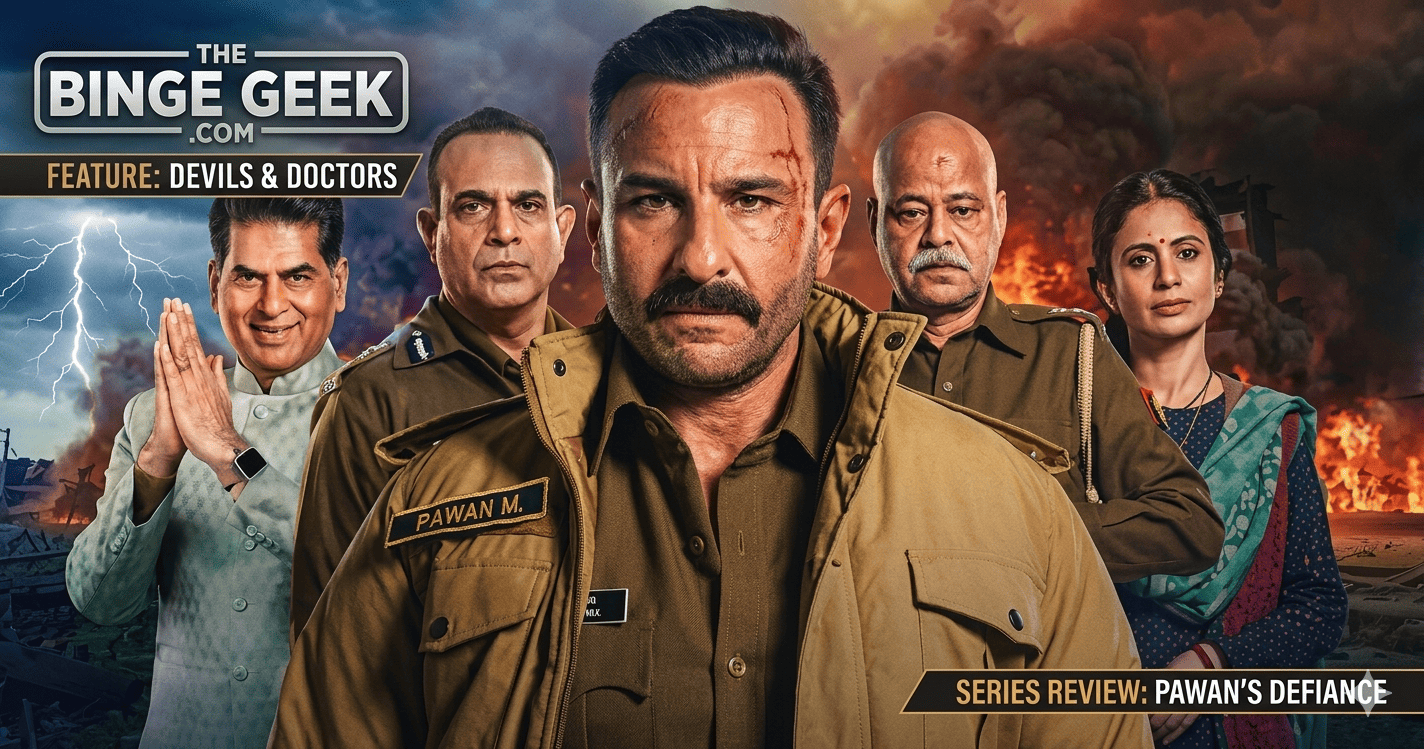
Pawan starts the tale as one of the few honest officers remaining in Jhamli, a town corrupted by caste politics and mob mentality. His job looks simple enough – guard a journalist investigating allegations against Anand Shri, a revered reform leader accused of child-labour abuse.
But the deeper Pawan goes, the uglier the truth.
The investigation finds that minors are being used for illegal work and then silenced when they become inconvenient. The killing of the journalist merely increases the pressure. But it turns out that a young boy named Harpal did the killing. And the situation becomes morally complicated, not legally simple.
There is some manipulation behind the scenes, thinks Pawan, and instinct slowly isolates him from the people around him.
The sweet promise of a new life begins to collapse his personal life. His younger brother Deepak secretly marries Preeti, a girl of other caste. In Jhamli that decision is almost treated as a crime unto death.
This parallel storyline is the emotional backbone of the film. While Pawan tries to rescue exploited children from a corrupt power structure, he also tries to save his own brother from the same society’s obsession with “honour.”
The film’s real villain isn’t one man
One of the smartest things about Kartavya is that it doesn’t paint Anand Shri as the sole villain.
Yes, his network of influence breeds fear and corruption. But the movie often hints that collective thinking is the greater danger. Whole communities are involved in cruelty because tradition tells them to be.
The climax painfully drives home that point.
Deepak and Preeti’s marriage is an insult to the social order of the town. No one seems to care about compassion or the law. The couple is punished just for choosing each other.
The film gently demonstrates the way in which the ideology of the mob destroys individuality. People cease to think morally and begin to act as defenders of “custom.”
Which is why the ending hurts so much.
Ashok’s betrayal changes everything.
Ashok is suspicious for most of the movie, but not overtly dangerous. But the climax shows him to be one of the major reasons Pawan cannot protect the people closest to him.
Ashok leaks information about Deepak and Preeti’s location secretly. He’s worse than that, he is in league with the perpetrators of violence in the town.
His betrayal destroys whatever trust Pawan still had left in the system.
There is a scary scene when Pawan takes Ashok along when he confronts Anand Shri’s men. Initially, Ashok pretends to be innocent, like he still thinks he can talk his way out of the situation.
Instead, the conflict escalates.
Pawan shoots the henchmen, and leaves the constraint of a police officer. At that moment, he does not care about the law anymore. Only anger does.
No way out, Ashok finally reveals the horrifying truth: Deepak was murdered by Pawan’s own father.
Why it matters that Pawan kills his father
The most shocking moment in Kartavya is not the shooting. It’s the emotional crash underneath.
Pawan comes to know that it was his own father who killed Deepak by slitting his throat for the sake of so called family honour. This revelation shatters whatever little emotional stability was left in Pawan.
Then the film delivers its darkest sequence.
Pawan drags his father to a secluded field and kills him.
No heroic framing here. No background score of victory. It’s a cold, tired, empty picture. The movie does not make it feel like satisfying revenge on purpose.
Instead it feels like the ultimate triumph of violence itself.
Pawan becomes the man he fought against through the film – a man who decides who gets to live based on his own conviction.
The most important conversation of the ending
After the killings, the movie slows down and we get a surprisingly contemplative final chat between Pawan and his wife.
This is where the film reveals its real purpose.
Pawan admits that he crossed the line, openly. He knows the irony of that, how he tried to fight against honour killings and mob justice and got executions of his own.
That self-awareness is what sets Kartavya apart from simpler revenge dramas.
The movie doesn’t quite justify Pawan’s actions, nor does it quite condemn them. Instead it leaves viewers stuck in the same moral confusion as its protagonist.
There is a particular haunting note when Pawan is worried about his son’s future thoughts of him.
That fear is relevant because the film keeps repeating how hatred and prejudice are passed down from generation to generation.
Earlier in the story, Pawan’s father would take the boy to panchayat meetings regularly, exposing him to toxic social ideology at a formative age. The child learned the language and the attitudes around him quickly.
The horrible implication is that violence continues because children are handed violence long before they’re old enough to question it.
Kartavya’s Notes on Justice and Social Change
The reason Kartavya is memorable is because it does not try to find easy solutions.
The film recognizes that entrenched social beliefs aren’t blown away by one arrest or one impassioned speech. Every day, entire communities reinforce these systems.
The ideology lives on even after the death of its followers.
That’s why the ending feels so deliberately unresolved. Pawan may have punished some people but the environment that created them is still there.
The film challenges viewers to think beyond legal justice. Can society move forward when whole generations pass down prejudice as tradition? And can there ever be a real end to violence if each side believes it is right in what it does?
These questions haunt long after the plot itself.
Final Judgement
Kartavya works because it doesn’t want to be a generic police thriller. Beneath the investigation, beneath the violence, is a dark study of caste discrimination, inherited hatred, moral compromise.
The tragedy of the film’s end is not that people die but that Pawan loses the moral ground that he fought so hard to stand on. His evolution from lawman to executioner is the movie’s last warning about how broken systems corrupt even those who are trying to change them.
The narrative can feel heavy-handed at times, but its emotional honesty and uncomfortable themes stick with you long after the credits roll.
In the end, Kartavya does not ask if Pawan won. It asks whether anyone can in a society where justice and revenge are always bleeding into each other.