
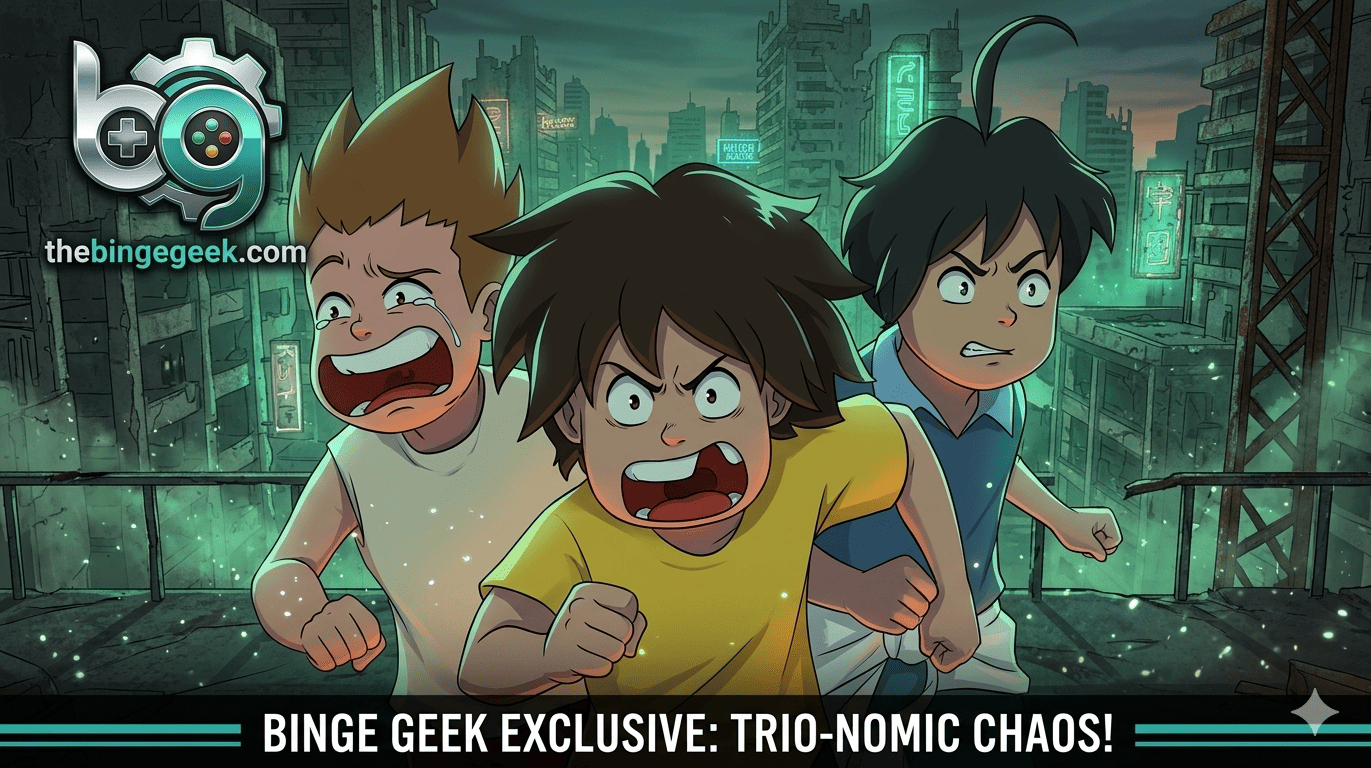
Kejora looks like it has everything it needs to be a hit: a Ghibli-inspired art style and a mystery about a town full of secrets that is quietly interesting. After a great year for point-and-click adventures in 2025, with games like Foolish Mortals standing out, it seemed ready to keep that momentum going.
Good Concept, Poor Execution
Everything works out on paper. It fails in execution. Kejora has a hard time making a lasting impression because of problems that are hard to ignore. It feels less like a bold experiment that didn’t work out and more like a game that came out too soon and could have used a few more months of polish by the time the credits roll.
Story Structure and Narrative Strengths
The story itself isn’t the issue. The story is told in three acts, and it builds up to a pretty satisfying final fight with the main bad guy. The game tries to flesh out its supporting characters along the way by using the familiar “sympathetic villain” angle. Even though it’s predictable, it still adds some emotional weight.
Weak Character Development
But the main three characters don’t get enough time to grow. Even though I’ve spent a lot of time with them, I still don’t know much about their personalities. The worldbuilding as a whole, on the other hand, is much better. The setting feels well-planned, and the hand-drawn animation in each cutscene adds to the game’s mood.
Art Style and Visual Presentation
Kejora looks great. The hand-drawn backgrounds are very detailed, the character designs are interesting, and the animations are always smooth. It may take some time to get used to the thick, dark red lines around characters and dialogue boxes, but they seem like a stylistic choice rather than a mistake.
Gameplay Falls Short of Expectations
Sadly, the gameplay doesn’t live up to how good it looks. Kejora teams up with her childhood friends Jaka and Guntur to solve environmental puzzles and get around problems. The puzzles are mostly easy, but they depend a lot on going back and using your companion’s powers.
Kejora’s Limited Role in Gameplay
Kejora is the main problem. Even though she is the main character, she doesn’t add much to the gameplay. Her friends do most of the work, so she feels more like an observer than someone who is doing something.
Companion Abilities and Mechanics
Jaka’s slingshot is useful because it lets him hit things that are far away and break things that are in his way. He also has the strength to move heavy things. Guntur’s main focus is on moving up and down, which helps Kejora get to higher platforms and clears paths with his strength. Both abilities are useful, but they show how little power Kejora really has.
Repetitive Puzzle Design
These mechanics are found in places we know, like forests, caves, and underground passages, but there are also new things like keys, locked doors, and levers. This adds some variety, but the gameplay doesn’t go beyond basic genre conventions very often, which makes it feel boring and repetitive.
Pacing Issues and Frustrating Design Choices
There isn’t much of a challenge, and sometimes the design gets boring. The game’s pacing is hurt by slow, unskippable animations and having to go back to the beginning all the time. For instance, one crane sequence late in the game makes you watch long animations with no way to undo mistakes, which makes repeating them even more annoying.
Artificial Padding and Backtracking Problems
In another part, you have to collect keys for several safes, but because you can only carry one key at a time, you end up moving back and forth over and over again instead of solving problems. These moments don’t feel like they were planned; they feel more like fake padding.
Missed Opportunities in Puzzle Creativity
There are hints of creativity, like puzzles with moving doors and levers, but they never really take off. It seems like the game is more interested in making its runtime longer than in improving its best ideas.
Dialogue System and Writing Issues
Another weak point is the dialogue. The game relies a lot on text, but the way it works isn’t always the same. Skipping dialogue only works in some cases, and moving text forward often has input lag or doesn’t work at all. This is a big problem for a game with a lot of dialogue.
Lack of Distinct Character Voices
There isn’t anything special about the writing. It’s hard to tell the characters apart because they all speak and use the same words. As a result, important moments lose their power and seem more like they are just there to serve a purpose.
Sound Design and Music Limitations
The sound design doesn’t help. There aren’t many songs on the soundtrack, and they play over and over again to the point where they become annoying. The lack of variety is understandable given the game’s smaller scale, but it makes the experience less enjoyable.
Technical Issues and Bugs
Technical problems make these issues even worse. It’s surprising how many bugs there are in a game that only lasts three to four hours. Players can run into soft-locks, especially when they use Guntur’s powers in small spaces. Positioning is too exact, and even a small misalignment can stop actions from happening.
Control Problems and Checkpoint Frustration
There are also problems with switching characters that don’t work, achievements that don’t unlock, sound effects that keep playing, and sometimes the controls don’t respond. These problems, along with infrequent checkpoints, often make players have to replay parts, which is frustrating instead of helpful.
Unbalanced Final Boss Fight
The last boss fight shows off a lot of these problems. The fight is hard because you have to avoid dangers while taking care of friends who don’t know how to do it on their own. Instead of being hard, it turns into a matter of micromanaging their positions, which feels more like a design flaw than something that was meant to be hard.
Level Design and Visibility Issues
Sometimes, the design of the levels works against the player. In some places, it’s hard to see clearly, which makes it hard to know where to stand or what to do. It often takes a lot of trial and error to find the right answer, which ruins the whole point of the puzzle-solving experience.
Final Verdict – A Missed Opportunity
Kejora is a frustrating game in the end because it doesn’t live up to its potential. There are some clear strengths here, like a great story, well-built worlds, and beautiful art. However, the mechanics are clunky, there are technical problems, and the design isn’t always consistent.
Conclusion – Needs More Polish
This could have been something great if it had had more time and work. But right now, it feels like a promising draft that was sent out too soon. It’s hard to recommend, even though it looks nice.