
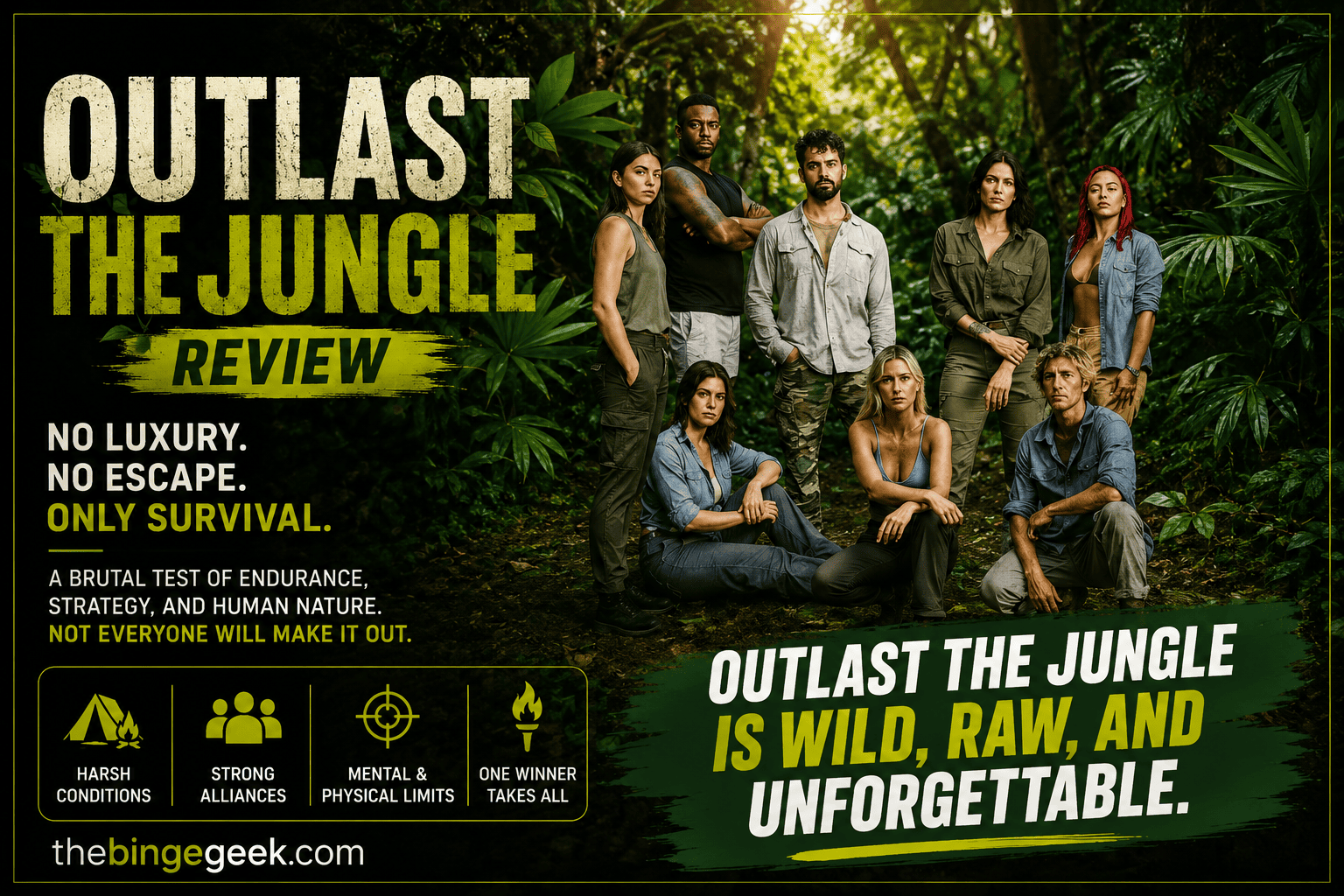
The premise of Outlast remains one of the most promising ideas in reality television. Strangers are dumped into the remote wilderness and must work together to survive while battling for a life-changing cash prize. Sounds like the perfect mix of strategy, endurance and human psychology on paper. Unfortunately Season 3 doesn’t quite fulfill that promise.
The new season is set in the dense jungles of Panama, where 16 contestants will battle for a $1 million prize to be split among the members of the winning team. Participants must survive brutal conditions, form alliances, collect resources, and determine if loyalty or treachery will win them victory.
The premise is still compelling but the execution increasingly feels confused. Much of the season is spent chasing interpersonal conflict and artificial tension, rather than focusing on real survival skills. The end result is a show that seems unsure of what it wants to be.
At least past seasons had some connection to traditional survival programming. Contestants had a lot of practical wilderness knowledge, and survival itself seemed a core challenge. This season moves the focus away from those elements and to ongoing conflict, which makes the series more of a social strategy contest than an actual endurance challenge.
There are three camps along the shoreline in the game and each has its own survival advantage. One camp begins with shelter materials, another with fire-making supplies and the third with hunting equipment. This imbalance immediately creates opportunities for negotiation, alliances and conflict.
Sometimes, the format works exactly as it was meant to. Suspense is created through strategic trades between camps and various twists force players into making difficult ethical choices. One particularly shocking challenge involves contestants having to sacrifice a teammate for vital supplies, creating real tension and tough decisions.
The season also has a few reminders of the real dangers inherent in surviving in a tropical environment. One contestant is seriously injured, a stark contrast to the heavily produced nature of the rest of the series. These rare moments of authenticity reveal what the show could’ve been if it had trusted its premise more.
Unfortunately, those powerful moments are often buried under repetitive storytelling and over-narration. Important information is repeated so often that viewers are seldom allowed to draw their own conclusions about events. There is a tendency for contestants to describe a situation unnaturally, as if they were talking to the audience and not responding to a real situation.
The production is becoming harder and harder to ignore as the season drags on. Some scenes seem too contrived and some missions are so strategic that viewers have to suspend their disbelief.” The logistics of players covertly sabotaging rival camps whilst surrounded by camera crews often strain credulity to breaking point.
The problems are compounded by the cast dynamics. The majority of contestants are recognisable reality television archetypes, exaggerated rather than fully formed personalities. Several story lines go in expected directions with the conflicts and rivalries playing out just the way you would expect.
The biggest problem, however, is from one particular camp which becomes the focus of a lot of the negativity of the season. Instead of interesting strategic play, the group often fosters an environment of hostility and bullying. The behavior of the participants makes many episodes uncomfortable to watch and overshadows the survival aspect of the show.
The frustrating thing about this is that there is still an interesting idea at the heart of Outlast. The social experiment part is still interesting. It’s interesting to see how people struggle to maintain the balance between cooperation and self-interest, especially when there’s a million-dollar prize at stake.
Series creator David Wiener has previously talked about how far people will go for money, and that notion continues to provide some of the season’s most compelling moments. But the balance this year between psychological experimentation and survival competition feels all wrong.
The show keeps going back to arguments, betrayals and personal conflicts, instead of showing resourcefulness, teamwork and resilience. Sometimes the jungle setting seems more like a set than reality television drama.
The irony is that the worst episodes are the ones about co-operation and survival. It’s much more fun to watch contestants build shelters, find food and overcome environmental challenges than the endless stream of confrontations. These moments serve as a reminder to viewers of why the premise was so appealing in the first place.
From a competitive standpoint, the season also falters. Strategy remains vague, survival skills are sidelined and the game is dependent on external resource drops. The format often rewards contestants who appear ill-prepared for the rigors of wilderness living, rather than rewarding preparation and expertise.
The Panama setting is still visually impressive and the overall concept still has enormous potential. The show’s presentation is slick, and several production choices successfully establish a sense of scale and danger. But these positives are diluted by repetitive editing, forced drama and an enduring focus on toxic behaviour.
By the finale, Outlast Season 3 isn’t really a survival competition, but a heavily produced reality drama masquerading as a wilderness challenge. There are occasional sparks of real tension and interesting human behavior, but they are not enough to overcome the larger problems of the season.
RULING
Season 3 is the weakest outing for Outlast yet. The show has a great setting and concept that still has promise, but it sacrifices authenticity for manufactured conflict. Fans who are looking for meaningful survival content may be disappointed, but fans of reality TV drama are probably going to find more to enjoy. Either way, the series still feels like it’s still searching for the right identity three seasons in.