
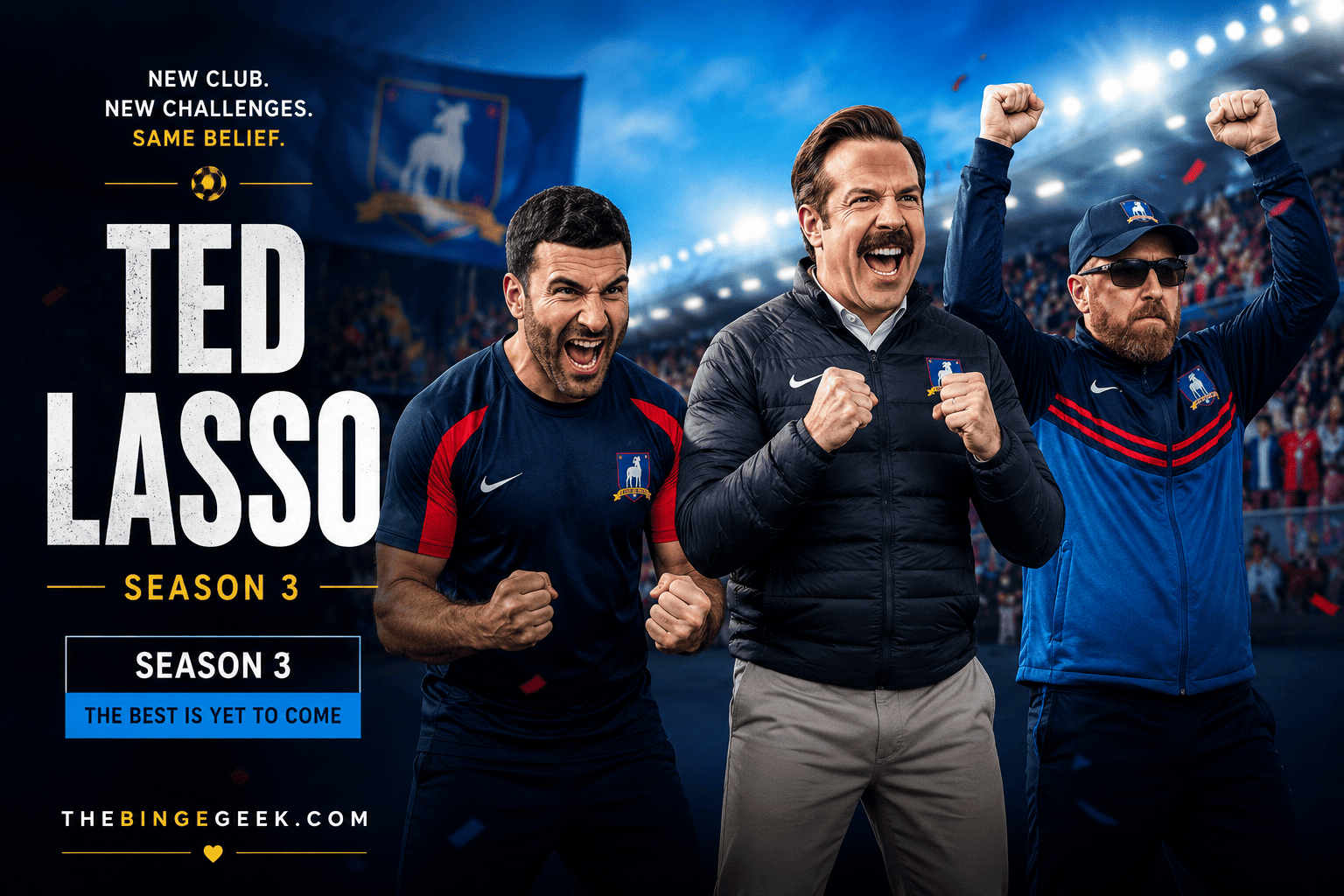
Following two remarkable seasons that blended comedy, hopefulness and emotional depth, Ted Lasso entered its third season with mammoth expectations. The Apple TV+ comedy-drama had become one of the most uplifting and beloved series on television, building up a loyal audience that were expecting another memorable chapter.
Season 3
still has its share of touching moments, strong performances, and feel-good storytelling, but it’s hard to keep the focus and consistency that made its previous seasons so successful. The result is a fun but flawed final chapter that never quite reaches the heights of its predecessors.
A Season Drawn in Too Many Directions
One of the biggest
challenges for Season 3 is the sheer number of storylines. Earlier seasons had a narrative to anchor them, with every subplot contributing to the show’s wider themes and overall trajectory.
This time around there
are a lot of character arcs to focus on. The season balances Ted’s personal struggles, Rebecca’s quest for happiness, Sam’s business aspirations, Colin’s personal journey, Nate’s redemption story, and a plethora of other plot lines all vying for screen time.
Many of these stories
work well on their own, but rarely do the stories come together in a meaningful way. Several plots feel disconnected from each other, rather than feeling like parts of a larger story, resulting in a season that often feels unfocused.
Plots That Go Nowhereland
Season 3 has some big developments that seem important at first, but they don’t have as much of an effect on the overall story.
Star soccer player
Zava arrives to inject life into Richmond, turning the team’s fortunes upside down, but his departure is as sudden as his arrival. Edwin Akufo also makes a brief return, armed with ambitious plans that threaten to reshape the football landscape, only for the storyline to fizzle out rather quickly.
These narrative detours make it feel like the season is always searching for a direction, rather than confidently striding towards a clear destination.
Ted Lasso Seat
For a show named after its title character, Ted spends a surprising amount of time on the sidelines this season.
The bulk of his story is about working
through his divorce, his family situation and the emotional weight of being far from home. These themes are important and often handled sincerely, but they leave less room for Ted to be the inspirational leader who became the heart of the series.
His absence is felt
. And the show loses some of its individuality. Richmond’s growth seems less powered by the optimism and energy and guidance that once were in evidence.
Season saved by strong character moments
Season 3 falters in its storytelling at times, but still shines when it focuses on character development.
One of the best things about the season
is the relationship between Roy Kent and Jamie Tartt. Their frustration with each other turns into mentorship, respect and a true friendship. Their dynamic gives us some of the funniest moments of the season, and some meaningful emotional growth.
Jamie in particular gets one of the strongest character arcs of the series. It’s satisfying and rewarding to watch his growth from an arrogant star to a mature team leader.
Rebecca’s journey,
too, is compelling for much of the season. Her emotional development feels genuine, but her story arc can be inconsistent at times. Hannah Waddingham is again a standout, infusing every scene with warmth, humor, and vulnerability.
The Spirit of Richmond Continues to Work
Ted Lasso never entirely loses its heart, even when the storytelling falters.
One of the season’s most memorable moments is when Richmond becomes a family. These scenes, whether they’re Sam struggling through a rough patch or the gang coming together in times of uncertainty, remind us why we fell in love with the show.
The show’s central message
is still the team’s sense of togetherness, compassion and willingness to lend a hand. These moments may be less frequent than they once were, but they are still very effective.
And the culmination of the football matches provides real excitement, too. Richmond’s biggest challenges have the emotional stakes to let viewers see just how far the club has come since the beginning of the series.
Annoying Decisions and Questions That Remain Unanswered
There are some creative choices in Season 3 that might also divide fans.
Some relationship developments seem unnecessary, some seem to regress on years of character development. Some plotlines are given a lot of buildup only to be dropped, and others are shockingly unresolved.
The season often throws up questions that don’t have satisfactory answers. “So some viewers might be more interested in what the show didn’t do, than what it did do.”
The Bottom Line
Ted Lasso Season 3 is not bad. It’s still funny, still emotional, still full of the optimism that made the series such a cultural phenomenon. The acting is solid, the emotional moments frequently hit home, and the show’s message of compassion still rings true.
However the season
doesn’t quite live up to the brilliance of its earlier episodes due to inconsistent writing, cluttered storytelling and a lack of narrative focus.
Not the perfect farewell many fans had hoped for, but Ted Lasso still manages to offer up enough warmth and humanity to remind audiences why they fell in love with Richmond and its characters in the first place.