
Meta Description (≤155 characters):
The Boys Season 1 is a bold, bloody and smart take on superheroes that delivers sharp satire, strong characters and shocking twists.
Introduction
For more than a decade, superhero stories have been the most popular genre on TV and in movies, but very few manage to break free of the tropes. In a time of constant reboots, multiverse expansion, and shiny hero narratives, audiences are trained for predictability. The Boys Season 1 on Amazon Prime Video is a controlled explosion in that landscape: messy, violent, darkly funny and surprisingly thoughtful.
The series does not glorify superpowers, but rather poses a troubling question: what if superheroes were products, under corporate control, and worshipped like celebrities? The answer it has is both amusing and deeply disturbing.
A World Where Heroes Are Brands, Not Saviors
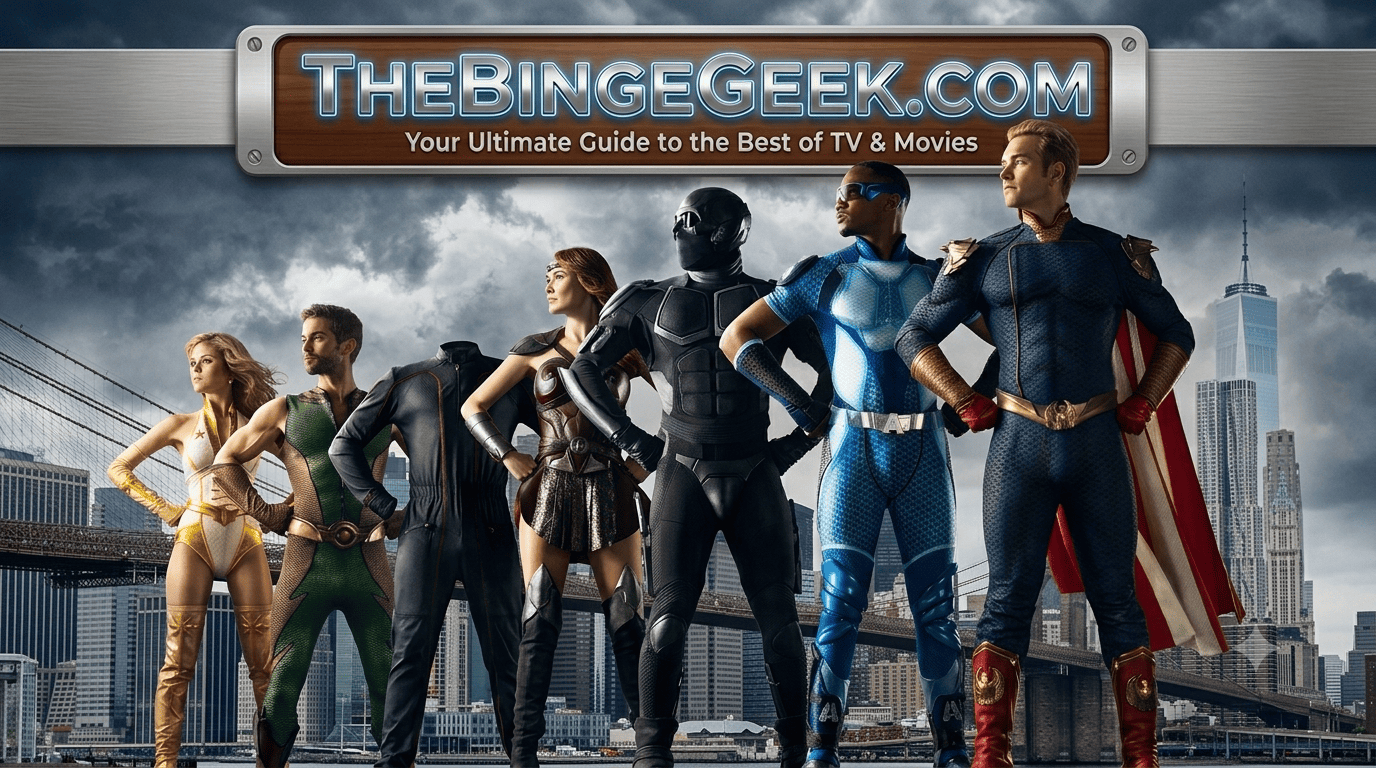
The Boys is set in a universe where superheroes or “Supes” are owned and operated by powerful corporate interests. The top of the manufactured hierarchy is an elite group known as The Seven, loved by the people and immune from accountability.
But under the slick marketing campaigns and heroic image-making there is corruption, ego and moral rot. This premise is cleverly subverted to lampoon the modern celebrity culture and the power of corporations, making the superhero genre feel strangely familiar and uncomfortably real.
The story’s catalyst is tragedy: Hughie’s life is ruined when A-Train, the fastest man alive, accidentally kills his girlfriend in a horrific accident. Even worse than the act itself is the fact that it is done without any remorse at all. That moment is the spark for revenge and the start of a much larger conspiracy.
Revenge, Defiance and a Broken Alliance
Hughie soon finds himself dragged into a dark world of resistance led by Billy Butcher, a man driven by personal vendettas and an obsessive hatred of Supes. They, along with Mother’s Milk and Frenchie, make up an unlikely and deeply dysfunctional team.
In theory their mission is simple, in practice dangerous. To expose and dismantle the truth behind superheroes. The more they dig the more disturbing secrets they uncover, including the fact of the existence of a mysterious substance called Compound V, which is a key component in the creation of Supes.
What makes this trip interesting is not so much the external superhero conflict, but the internal friction within the group. Trust is thin, motives are suspect and loyalties change by the minute.
Characters That Are Too Human
One of the best things about The Boys Season 1 is that it doesn’t try to make its characters into heroes or villains. Everyone is grey.
Hughie begins as a normal, emotionally fragile young man but slowly starts to change as grief pushes him toward revenge. Butcher is not your typical hero and his charm is only matched by his ruthlessness. Even if his actions become morally questionable, his pain is always understandable.
On the other hand, characters like Homelander and The Deep are more than just villains. Homelander is terrifying, but he’s also emotionally damaged, desperate for control and validation. Played for its discomfort and arrogance, The Deep is gradually stripped away to reveal the insecurity and humiliation which unexpectedly breed sympathy.
Even characters like Starlight, who play supporting roles, give emotional weight to the story, showing a view from within the corrupt system, rather than from outside.
Tone: The Balancing Act of Chaos and Satire
What sets the series apart is its ability to shift tone without losing its force. Sometimes it’s a dark comedy skewering superhero marketing and media obsession, and other times it dives into brutal violence or uncomfortable emotional territory.
There’s a lot of dichotomy play in the show. Shocking acts of violence sit alongside corporate advertising and public relations spin. Private corruption undermines heroic imagery. It’s a world where image matters more than truth, and that contradiction is a lot of what drives the storytelling.
Other genres are present, but never dominating. Instead, The Boys turns those influences on their heads and makes them seem even more cynical and sharp.
Storytelling Style & World Building
The series avoids excessive exposition, instead cleverly building the world through news clips, advertisements and media segments. This approach makes the universe feel alive, as if the audience is constantly absorbing pieces of a bigger machine.
The season, consisting of eight tightly-wrought episodes, maintains a concentrated story pace. There’s room for character development without missing a beat, and even minor characters are given enough attention to feel significant in the larger story.
Final Thoughts and Thematic Direction
The Boys Season 1 is not about superheroes at its core, it is about power, corruption, and how easily society can be manipulated by carefully curated images. It is an affront to the very idea of heroism, stripping away its glamour and showing something much more chilling underneath.
The series works because it never settles into one identity. It’s satire, thriller, character drama and action spectacle all rolled into one, and it manages to pull these elements off without imploding from its own ambition.
Final Sentencing
The Boys Season 1 is one of the most refreshing pieces of contemporary superhero storytelling. But the biting satire, emotionally complex characters and unapologetically violent storytelling make it impossible to ignore. It occasionally hits familiar genre beats, but its execution keeps everything feeling bold and unpredictable.
In the crowded superhero landscape, this is one series that doesn’t just wear the cape — it rips it apart.