
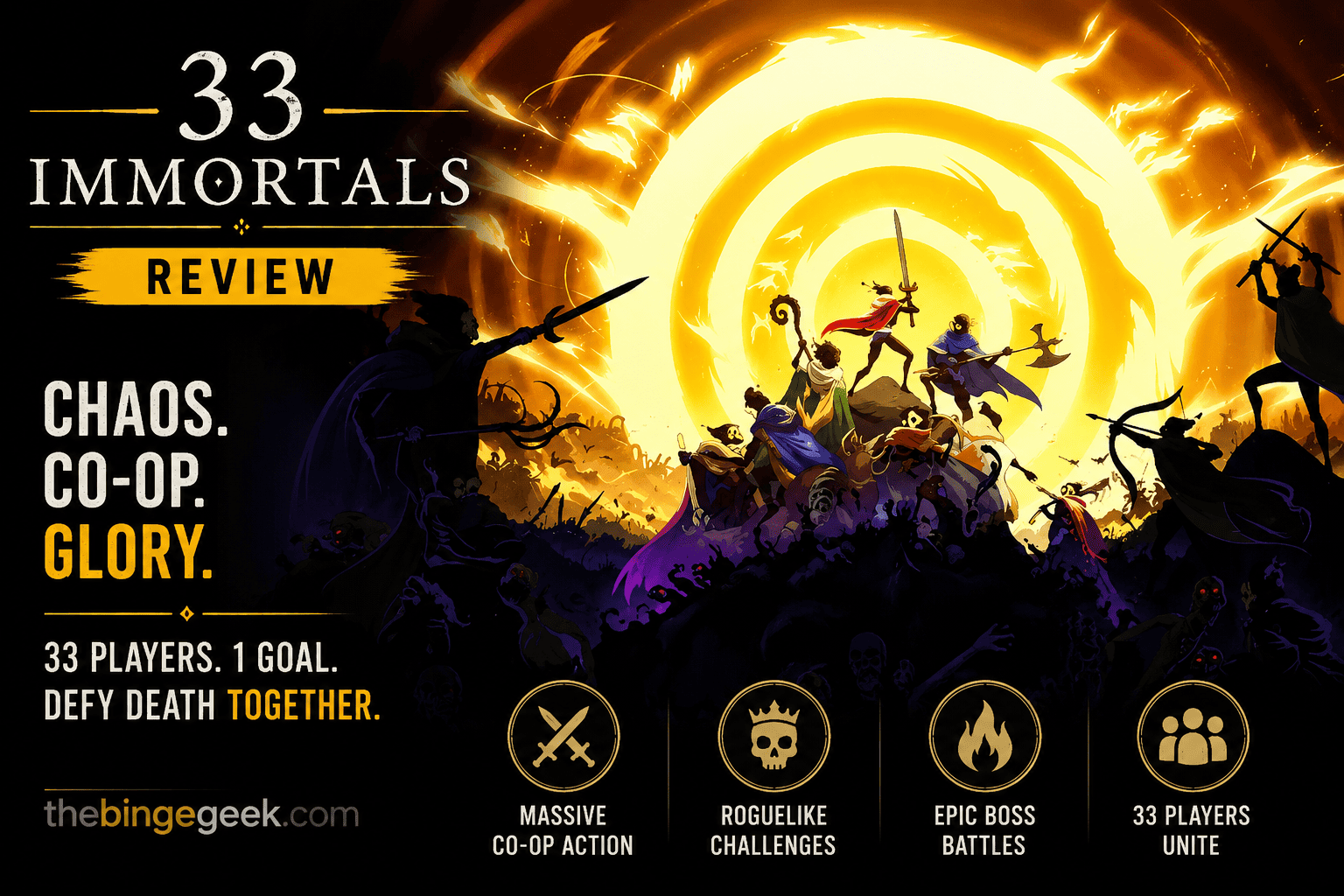
Few games try to mix large scale multiplayer gameplay with roguelike mechanics, but 33 Immortals does exactly that. Drawing from the frantic action of roguelikes and the collaborative setup of MMO raids, the game introduces a fresh concept that immediately catches the eye in a genre that is becoming ever more crowded.
33 Immortals is built around massive cooperative runs featuring up to 33 players. The matchmaking system is extremely smooth, enabling players to jump into the action without having to wait through long lobbies or long countdowns. From the moment you start the experience is smooth and accessible so you can focus on the action rather than setup.## A World Built on Religious Mythology
One of the most interesting things about the game is its setting. Playing a rebellious soul fighting divine judgment, players dive into a world of Christian themes and iconography. Players fight for survival in a fierce battle against the celestial forces and powerful bosses in three different realms.
The story line is pretty simple, but the world is full of atmosphere. Between runs, players go back to the Dark Woods, a hub area where progress is made. Here you can use the resources to buy upgrades, improve equipment and develop your character before you set out on another expedition.
The story is never the main attraction, but the aesthetic direction and thematic presentation make for a memorable backdrop for the gameplay.# Rapid Combat With Unique Roles
Players start with a limited set of weapon archetypes, each designed to cater to different playstyles. Whether you’re into ranged attacks, tanky combat or spellcasting abilities, you’ll find something to suit your style.
The combat system is simple and effective with light attacks, heavy attacks and weapon-specific abilities. The controls are intuitive, so players can easily jump into battles without a steep learning curve.
But as progression systems grow deeper, most players will probably find a favorite weapon class and stick with it. Every weapon is different, but the combat system isn’t deep enough to make you want to experiment with it for long periods of time.# The Gameplay Loop Is Very Addictive
The structure of each run is a familiar but satisfying formula.
Players start by exploring large maps with enemies, treasure chests and upgrade opportunities. At this point you are collecting resources to improve your current performance and long term progress.
During the run, special portals will be added to the map that introduces cooperative objectives that require multiple players to work together. These encounters give nice rewards and temporary perks that make a huge difference for your character builds.
In the last phase, the players are rushing to get to the ascension points, as the map is closing in on them. The last trial is finished and the group has to face a tough regional boss before they return to the hub with new loot.
This cycle of exploration, progression, cooperation, and boss fights creates a compelling gameplay loop that continuously begs for “one more run”.Progression Systems Has Lots of Long-Term Goals
The biggest strength in this game is the amount of progression.
Players can undertake Feats, which are long-term accomplishments that permanently boost the power of their character. These goals are naturally suited to gameplay activities, rewarding players for mastering mechanics and participating in cooperative activities.
Weapons can also be upgraded with permanent improvements, and Eternal Shards unlock more customization options and new co-op abilities.
This results in a progression system filled with meaningful rewards. Enough reasons for the players to keep leveling their character and trying out new builds even after they finish the available content.## Collaborating Is Key
33 Immortals is different to many action roguelikes in that it really pushes co-op.
There are many skills that get a nice boost when used around teammates, encouraging players to stick together rather than go solo. You can technically play solo, but it quickly becomes a difficult and inefficient experience.
The game is best played when a group of players work together. Epic battles are chaotic, rewarding, and incredibly satisfying, providing moments that few roguelikes can match.## The frustration of matchmaking and group splitting
Unfortunately, the game does not reach its potential due to a number of design choices.
The biggest issue is how players are split up when running. Even though the game promises large-scale cooperative gameplay, portal activities tend to break up groups into much smaller teams. This often means that some players have to wait for others to finish objectives before they can move on.
The problem is even more visible in later stages. The first area allows more players but later areas drop the numbers drastically. This may lead to longer queues and inconsistent pacing, especially when fewer players are available online.
These restrictions are at odds with the promise of large scale cooperation in the game and can sometimes break up the flow of otherwise enjoyable sessions.# Combat Repetition Starts to Show
Combat is initially exciting, but its limitations become apparent as time passes.
The not-so-big ability pool makes encounters feel repetitive after a few hours. The lack of enemy variety also hurts long-term interest, with many foes attacking and behaving similarly.
Even bigger elite enemies often come across as reskins of regular enemies rather than truly unique threats.
These repetitive elements will become increasingly grating the more time players spend with the game.# Boss Fights Can Be Punishing
The hard battles are made even harder by the resurrection system.
When players are killed, their teammates must revive them and they return with low health. A second death usually takes the character out of the encounter altogether.
It leads to tense boss fights, but can also result in frustrating situations when undergeared teams delve into high-level content. Combined with the game’s current balance issues, some encounters can feel more tiring than rewarding.
The limited variety, with only a handful of bosses at launch, is another aspect that hampers replayability.# Fantastic Sound and Presentation
33 Immortals is certainly well presented.
The visual design does a good job mixing dark fantasy with religious iconography to give it a unique look and feel that sets it apart from other games.
The soundtrack is just as impressive. The music features strong choir elements, orchestral arrangements, and atmospheric sound design that always contribute to the experience and elevate important moments for each playthrough.
It’s easily one of the best things in the whole package.# Conclusion
33 Immortals offers one of the most interesting concepts to multiplayer in recent years. The roguelike progression, the co-op gameplay and the large-scale raids all combine to create a unique experience that often feels genuinely exciting.
Still, repetitive combat, matchmaking frustrations, balance issues, and a lack of content keep it from being all it can be.
Still, the foundation is amazingly strong. The addictive gameplay loop, rewarding progression systems and focus on teamwork makes it hard not to keep coming back for another run.
33 Immortals has the potential to be a great co-op roguelike if it gets updated and polished. For now, it’s a bold and fun adventure that has a lot of promise in spite of its flaws.
Score: 7.5/10