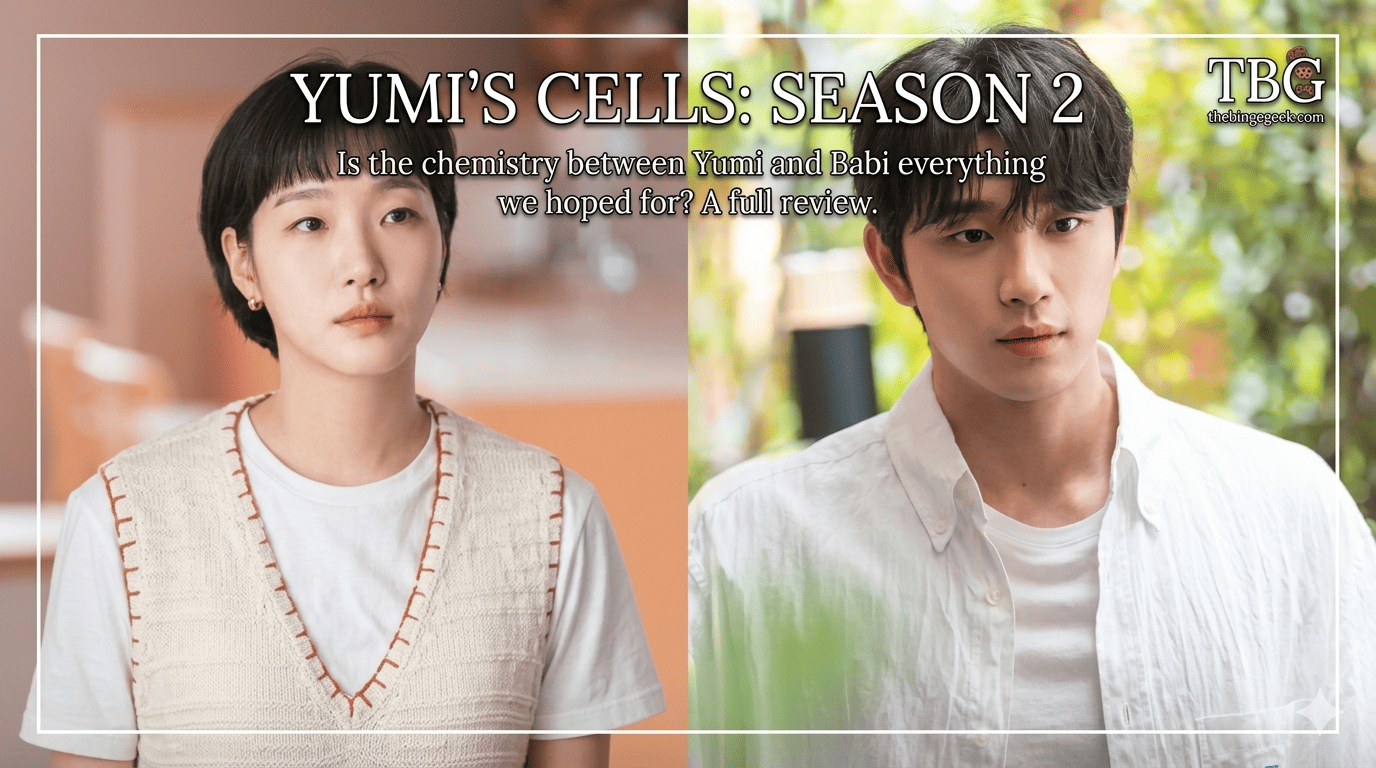
Yumi’s Cells are finally back after four years, bringing back Yumi and her lovable world of animated cells. The series once again offers us the oddball charm and the emotional narrative that defined the past seasons, Reason Cell to Love Cell. This time Yumi has found success as a best-selling author. She has money, fame, security but she’s empty, alone. Her inner world that once was alive, has been frozen and many of her cells put to sleep. Until a new person enters her life.
That is Shin Soon-rok, Yumi’s new producing director. Unlike her other boyfriends, Yumi doesn’t warm up to him right away. In fact, she instantly hates him for reasons that seem irrational but are surprisingly relatable. This awkward tension is captured in a humorous and honest way in the series and the cells provide their usual playful commentary that makes these moments all the more entertaining.
Soon-rok is introduced as a disciplined, reserved man who places a high value on his personal space. Kim Jae-won gives a strong performance and Soon-rok’s simple personality comes off as authentic rather than cold. His own cell village is also one of the most creative additions to Season 3, bringing a fresh perspective to viewers with its unique structure and personality.
Enemies to lovers trope works so well in the beginning. There’s romance, there’s emotional tension, and there’s just enough drama to keep things interesting without losing the warmth that makes this series so. Kim Go-eun and Kim Jae-won have a natural chemistry that gives the early episodes a fresh, familiar feel.
The good start, however, does not last.
Season 3 is a mere eight episodes, a far cry from the seasons that came before it, and it often feels like there’s not enough time to let its central relationship breathe. The pacing changes dramatically halfway through and it’s evident that the story has a lot more ground to cover than the remaining episodes can easily accommodate.
This is particularly disappointing because the first half of the season is actually pretty fun, largely thanks to Kim Go-eun’s consistently charming performance as Yumi. Even if some of the romance feels a little fast, the warmth and humor of the series make it easy to stay invested.
But once the story really gets going, there’s a rush of major emotional developments, with little chance to catch your breath. One of the best things about the earlier seasons was their patience. They made the viewers feel Yumi’s emotions with her, so that every little moment seemed important. Season 3 ditches that slower, more intimate approach.
Instead, the last episodes are almost rushed in pace. Important relationship milestones feel rushed into quick sequences, rather than unfolding naturally on screen. The seventh episode is more of a montage of a love story than the emotional rollercoaster viewers were hoping for.
Soon-rok’s character is also a victim of this rushed storytelling. People are often different in relationships but his change is not so much the development of emotional maturity as it seems like a sudden personality change.
Despite these problems, Yumi’s Cells Season 3 has plenty of the charm that made the series great. The humor is still great, the romance still has some heartfelt moments, and the cute cells are still scene stealers.
But while there are entertaining moments along the way, the story as a whole doesn’t provide the satisfying ending that Yumi’s journey deserves. After three seasons of watching her grow, suffer heartbreak and find love, Yumi and her cells deserved a much more complete ending.