
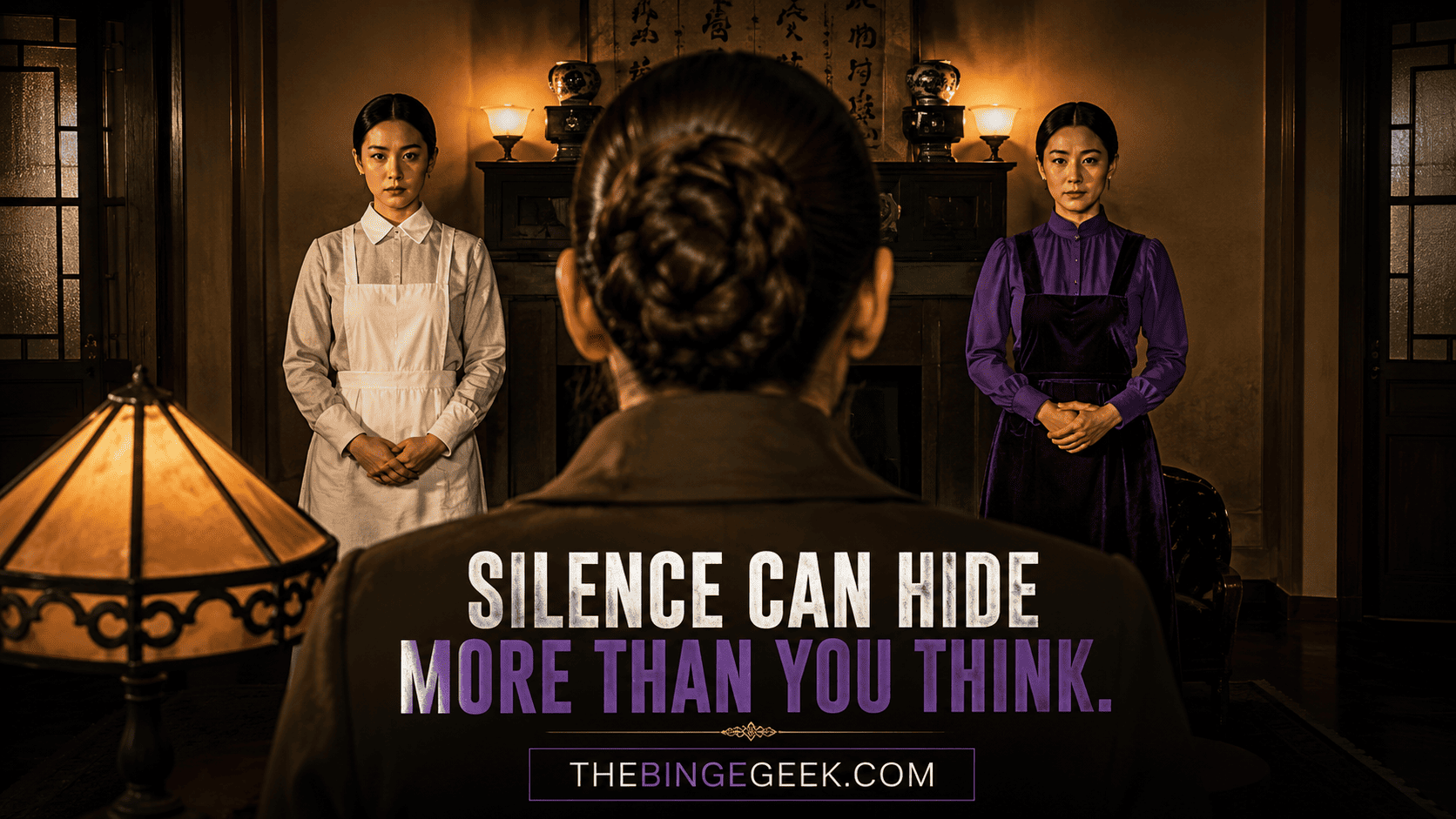
After six seasons of The Handmaid’s Tale, Gilead’s story felt both exhausted and incomplete. The original series gave us some unforgettable performances, especially from Elisabeth Moss, but its final stretch left many major emotional threads dangling. The battle for Hannah in June, Mayday’s revolt, the larger unraveling of Gilead—these all felt like stories that had yet to find their proper conclusion.
This is the purpose of The Testaments.
Set four years after the events of The Handmaid’s Tale, the sequel series pivots away from June and centers on Hannah, now living inside Gilead as Agnes. Raised by Commander Mackenzie and his unstable wife Paula, Agnes has grown up within the very system her mother fought so hard to destroy.
That change of view gives the show a new identity. Instead of revisiting June’s trauma, The Testaments delves into Gilead through a younger generation of girls who are moulded, controlled and groomed for marriage in a deeply repressive society.
An Inside Look Into Gilead
One of the season’s biggest strengths is its internal look at the rituals and structure of Gilead. It’s disturbing to watch Agnes transition from childhood into womanhood, especially as the show exposes how girls are sorted, educated and groomed for the roles they’ll play in the future.
The worldbuilding really is at its best when the series hones in on these details. The rules, ceremonies and expectations placed on young women make Gilead as terrifying as it was in The Handmaid’s Tale, but the perspective feels fresh enough to not be repetitive.
Aunt Lydia gets some much-needed love this season as well. Her role in Gilead has always been complex but The Testaments gives her further depth, exploring her past and her connection with the girls in her care. The best episode of the season was one that focused on Lydia, giving emotional heft to a character that’s been long overdue for a closer look.
Daisy and Becka Carry the Season Agnes
It’s a show that weaves its tale around three pivotal young women – Agnes, Daisy and Becka.
Agnes is the emotional core of the season, caught between the life Gilead has built for her and who she really is. Meanwhile, Daisy is introduced into the narrative from Canada and joins Mayday’s cause against Gilead. Her undercover storyline adds tension to the season, but not always with complete believability.
Mattea Conforti as Becka is the star of the season. Her character adds pain, fear, innocence and quiet strength to the story. Over the course of the 10 episodes, Becka becomes one of the most interesting characters in the series, and her story arc is something that stays with you by the time the finale rolls around.
Chase Infiniti and Lucy Halliday also turn in strong performances as Agnes and Daisy. They’re not quite as intense as Elisabeth Moss’s performance in The Handmaid’s Tale, but both help give The Testaments a voice of its own.
Where Season Falls Short
The Testaments’ weakest moments are when the story goes too far into Mayday and the wider rebellion. The resistance plot has some promise but some of the writing is a little thin. But it’s surprising how much Gilead still feels untouched in many ways. The Handmaid’s Tale’s events have taken their toll.
Daisy’s spy story line also causes some problems. The series sets up the brutality of Gilead’s treatment of spies and traitors, but Daisy at times behaves as if she is not an undercover agent. These moments relieve the tension, and make parts of the plot less believable.
There are also some side conflicts thrown in without enough payoff, like the tension between Aunt Lydia and Aunt Vidala. The season obviously saves some threads for later, but a few storylines could have done with more development here.
A visually arresting return
Visually, The Testaments retains much of what made The Handmaid’s Tale so memorable. Cinematography is slick, symbolic and often hauntingly beautiful. Religious imagery, overhead shots and carefully framed ceremonies add to the cold, controlled atmosphere.
The familiar monologues that open each episode are back, but they work better here, as the perspective shifts from character to character. This adds more variety to the season and prevents it from feeling trapped inside one person’s pain.
Final Judgment
The Testaments Season 1 isn’t perfect, but it’s a strong follow-up to the world introduced in The Handmaid’s Tale. The season is at its best when it’s about Agnes, Lydia, Daisy, Becka and the suffocating rituals of Gilead. It falters slightly in its attempts to expand the story of the rebellion, but the emotional core of the story is strong enough to keep the series compelling.
After the uneven ending of The Handmaid’s Tale, this sequel feels sharper, more focused and more promising than expected. With another season already in the works, The Testaments has plenty of intriguing characters and unresolved conflict to keep audiences engaged.