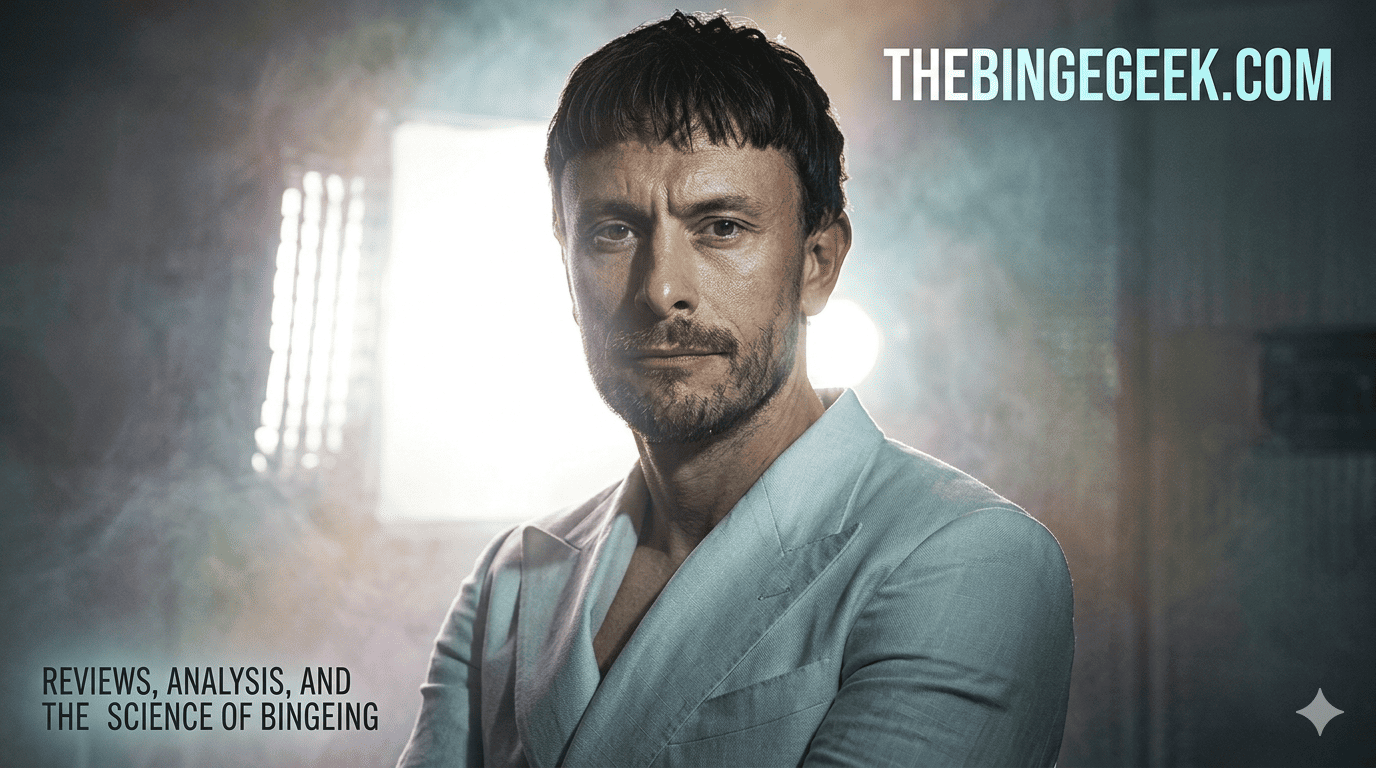
Richard Gadd returns with his second major project, Half Man, made with BBC and HBO after the global attention of Baby Reindeer. Gadd has high expectations and is now venturing into difficult territory again, exploring themes of identity, masculinity, trauma and emotional damage. The result is a series that sounds familiar in tone, but is completely different in execution.
Gadd stars in one of the lead roles alongside Jamie Bell, Stuart Campbell, Mitchell Robertson, Neve McIntosh, Marianne McIvor and Charlie de Melo. She is also a writer and co-developer on the series.
Story Synopsis
Season 1 of Half Man begins with Ruben Pallister crashing the wedding of his long lost stepbrother Niall Kennedy, violently. It’s a shocking reunion that sets the tone for the series as the confrontation escalates quickly with Ruben attacking Niall. The story then flashes back to the 1980s where we see the two boys growing up together after their mothers become romantically involved.
A six-part miniseries that jumps back and forth in time, slowly revealing how their childhood together shaped the explosive and destructive relationship they have as adults.
A broken, complicated brotherhood
At its heart, Half Man is a deeply complex tale of two stepbrothers entangled in a web of love, hate and violence. Ruben is an aggressive, domineering and emotionally repressed person who often expresses control through aggression. Niall, on the other hand, is more vulnerable, insecure and in need of approval, while struggling with fear and confusion about who he really is.
Their relationship becomes a prism through which the series explores toxic masculinity, internalized shame, emotional neglect, and repressed sexuality. Despite their conflicts, there is definitely an emotional dependency between them. They are shaped by absent father figures, social pressure and the difficulty of growing up in an environment where there is not much emotional safety.
Results
The performances are one of the strongest elements of the series. Jamie Bell and Richard Gadd, as their older selves, give intense, complex performances and Stuart Campbell and Mitchell Robertson pull off the emotional weight of the flashback timeline convincingly.
Beneath the hard shell, Bell captures Niall’s insecurity, a man whose confidence is based on unresolved trauma and self-doubt. Gadd imbues Ruben with a contained intensity, a character who won’t admit to being vulnerable, even as it starts to crack his identity.
The younger actors are just as important in framing the story. Campbell in particular brings charisma and emotional complexity to young Ruben, making the transition to Gadd’s adult performance seem seamless and natural.
Direction & Ambiance
The series is always so dark and oppressive in its atmosphere. The clinical lighting, muted colors, and deliberate cinematography heighten the emotional weight of the narrative. The tension underneath never goes away, not even when the story strays for a moment into more colorful times.
The editing style is intentionally disjointed, mirroring the instability of the characters’ emotional states. This creates a sense of discomfort which keeps the audience on their toes at all times, mirroring the unpredictability of Ruben and Niall’s relationship.
Themes and Writing
The writing is sharp and psychologically astute. The series takes time to explore the inner motivations of both protagonists, allowing the audience to see how their destructive behaviors came to be, rather than presenting them as one-dimensional characters.
The show is compelling because of its attention to character psychology, even with deeply flawed characters. The story asks viewers to consider how trauma, setting and emotional suppression shape masculinity.
But the series does have its limits. Supporting characters are under-developed, many simply reflecting or amplifying the central conflict between the two brothers. This keeps the focus, but it also limits the emotional world of the story.
Judgement Day
Half Man Season 1 is not a light watch. It deals with heavy themes, maintains a dark tone throughout, and its portrayals of violence and emotional dysfunction can be disturbing. But that intensity is also what makes it meaningful.
Half Man is a challenging and absorbing experience for audiences interested in psychologically complex drama and uncomfortable truths about identity and masculinity. The core relationship between Ruben and Niall is unsettling, compelling and impossible to ignore, making the series a challenging but memorable watch.